
Four months after Congress funded an additional 2.8% pay increase for air traffic controllers, the money has yet to reach workers already stretched by chronic staffing shortages, mandatory overtime, and six-day workweeks.
Federal Aviation Administration Administrator Bryan Bedford has linked implementation of the additional pay to a broader push to change how controllers are scheduled and utilized, telling the Washington Examiner that working with the controllers’ union to get “as much utilization out of our workforce as we can” would help “unlock the 2.8%.”
Recommended Stories


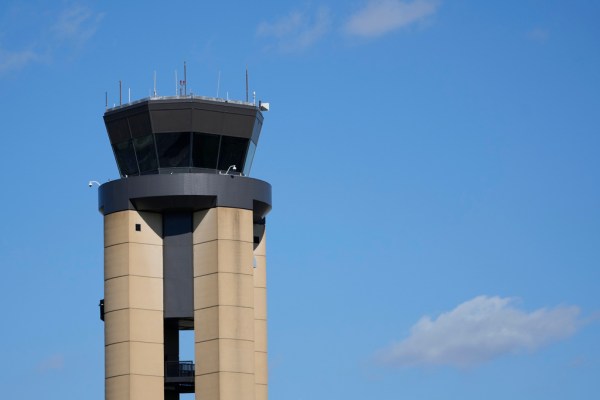
The dispute is adding to frustration inside a workforce that remains roughly 3,000 controllers short, with current and former controllers warning that prolonged staffing problems are hurting morale, complicating recruitment, and leaving the nation’s air traffic system with less room to absorb weather and other disruptions.
“The morale is at an all-time low, as well as staffing,” Dave Riley, a retired FAA air traffic controller and former union representative with more than three decades of experience, told the Washington Examiner. Riley worked at facilities including Denver Tower, Denver Approach, and Phoenix Approach before retiring in 2020, following an air traffic control career that began in the Marine Corps.
Riley said controllers have already been working “excessive amounts of overtime for an extremely long period of time,” while training interruptions have made it difficult for the FAA to rebuild the workforce.
The strain can also become visible to the flying public. When a facility is already operating with thin staffing, weather, sick calls, or other disruptions can leave controllers with little ability to absorb additional traffic. The FAA can respond by slowing the flow of aircraft into affected airspace, meaning a staffing problem hundreds of miles away can ultimately translate into delays or longer waits on the ground for passengers.
One current controller, who requested anonymity due to concerns about professional retaliation, said some facilities are operating with such slim margins that losing just one or two employees can be enough to limit the number of aircraft moving through the airspace.
What is holding up the 2.8% raise?
Congress provided the funding in April to bring the controllers’ 2026 pay increase in line with the 3.8% raise received by military personnel. Controllers had already received the 1% increase provided to federal civilian employees in January, leaving an additional 2.8% that has yet to be implemented.
The FAA pushed back on the suggestion that the agency itself had attached conditions to the additional pay, pointing to language in the law that gives the administrator discretion to implement the increase after determining that certain operational improvements have been achieved.
“As the statute makes clear, Congress, not the FAA, made the pay increase contingent on the FAA Administrator determining that improvements in workforce scheduling, staffing utilization, or other operational efficiencies have been achieved that contribute to addressing workforce shortfalls and enhancing aviation safety,” FAA spokeswoman Hannah Walden told the Washington Examiner.
The statute gives the administrator “sole discretion” to make that determination and provides that, if the determination is made, the pay adjustment would be retroactive to the first pay period beginning after Jan. 1.
Bedford, in an interview with the Washington Examiner last week, tied the remaining increase to changes he wants to make to controller scheduling and workforce utilization.
“If you look at the 2026 controller workforce plan, it’s actually spelled out in there,” Bedford said when asked what was preventing the FAA from implementing the pay increase. “We talk about all the things that we feel like we need to do to unlock more productivity.”
Pressed on whether controllers were not productive enough, Bedford said the FAA wanted to work with the National Air Traffic Controllers Association to reevaluate how employees are deployed throughout the day.
“I can tell you many examples I’ve looked at would indicate there is a lot we can do to better utilize the limited staff we have when there’s actually traffic to control, as opposed to having lots of staff around when there’s very limited traffic to control,” Bedford said.
The workforce plan Bedford cited lays out an aggressive effort to increase controller utilization and overhaul scheduling. The document identifies “workforce utilization” as one of the FAA’s most significant opportunities to improve operational performance and says the agency needs better tools to use its existing workforce more efficiently.
The plan notes that controllers averaged roughly four hours of “time on position” during an eight-hour shift in recent years and says modern scheduling and optimization tools could increase that figure to more than five hours. At the same time, the FAA acknowledges that chronic mandatory overtime “leads to fatigue, controller burnout and ultimately loss of retention.”
The agency also says it will “review Basic Watch Schedules and re-evaluate individual facility hours of operations” to better match its limited controller workforce with periods of high traffic demand.
While Congress conditioned the pay increase on operational improvements, the statute does not prescribe the specific scheduling or staffing changes Bedford must achieve before making that determination. Bedford has focused on scheduling and workforce utilization, including changes he says require engagement with NATCA.
When asked whether controllers themselves were responsible for the problem when the FAA determines their shifts and assignments, Bedford said the issue was “not about fault.”
“This is about decades of practice that have become just the reflux,” Bedford said. “So there hasn’t been a critical reevaluation of how we schedule the workforce, or even how we set operational hours, or even how we combine. None of that stuff has been reviewed in decades.”
How much can the FAA change on its own?
Bedford pointed specifically to facilities that remain open around the clock despite handling little traffic overnight.
“If I have a facility that’s open 24/7, but I have no traffic from 11 p.m. to 6 a.m., why do I have two controllers there when I can take that resource and bring it into the day when I actually have traffic to manage?” Bedford said.
But the FAA has had a process for addressing that scenario for nearly two decades. An FAA order titled “Changing Operating Hours for Terminal Facilities” took effect in 2008 and establishes criteria and guidance for reducing or increasing operating hours at terminal air traffic control facilities.
Under the order, a facility is a candidate for reduced operating hours when it averages four or fewer flights per hour over a representative 90-day period. If a facility operates around the clock, the threshold generally must be met for five or more consecutive hours.
The directive says that “to enhance the agency’s management of limited staffing resources,” FAA management must assess whether it makes sense to stay open during periods of low traffic. It says staffing savings may be achieved by reducing hours during late evening and early morning periods, allowing resources to “be realigned for more effective use during other periods or at other locations to support higher density operations.”
The order also puts approval authority for changing operating hours within FAA management. A reduction of four hours or more, or a change that results in a decrease in personnel, is considered a significant change requiring the FAA administrator’s approval and notification to the transportation secretary. Directors of terminal operations are authorized to make smaller reductions.
Current and former controllers said that existing authority raises questions about which changes actually require an agreement with NATCA.
“If they don’t want buildings open 24 hours because they don’t think there’s enough traffic on the mid, that is completely in the FAA’s control,” one current controller with more than a decade of experience said. “There’s nothing stopping them from shutting these facilities down in the midnight shifts if they’re thinking we’re wasting bodies.”
Another current controller offered a more nuanced assessment, acknowledging that NATCA may have a say when changes affect the basic watch schedule or other working conditions but noting that the underlying decision over operating hours is largely an agency responsibility.
“His point about some facilities being open 24/7 despite working very little, or sometimes no, traffic during the mid shift is something that is largely within the agency’s control,” the controller said. “The agency assigns the work.”
“If the agency does not believe it is justified for a tower or radar facility to remain open overnight, and wants to reallocate that staffing to day and evening shifts, it is my understanding that it generally has the authority to do so,” the controller added.
Riley similarly said the FAA ultimately retains the right to assign work even though changes affecting working conditions can be subject to collective bargaining.
“Staffing is honestly an assignment of work, is ultimately the FAA’s purview, management’s right to assign work,” Riley said.
Bedford indicated the 2.8% increase could still be implemented this year if the two sides reach an agreement over scheduling.
“If we can figure out how we can engage with, you know, the union leadership on the basic watch schedule questions that we just discussed, there’s no reason we can’t unlock it this year,” Bedford said.
Walden said the FAA “looks forward to continued engagement with NATCA to review historic scheduling practices and identify opportunities to increase productivity,” arguing that more productive schedules would help address workforce shortages, improve aviation safety, and improve controllers’ quality of life.
NATCA did not respond to a request for comment on Bedford’s remarks or the status of discussions with the FAA.
‘Tired’ and ‘overworked’
Controllers who spoke with the Washington Examiner said they believe the disagreement extends beyond whether some facilities should remain open overnight. One current controller described the pay increase as a new bargaining chip for the FAA as it seeks broader scheduling changes.
“What Bedford is saying really is nothing new,” the controller said. “The agency has been trying to do ‘more with less’ through scheduling for some time. What has changed is that he now has the proverbial carrot, the 2.8% raise, to try to get controllers to accept what the agency wants.”
Controllers also pushed back on the FAA’s emphasis on “time on position” as a measure of productivity. The metric tracks the amount of time controllers spend actively directing aircraft, but does not capture everything they do during an eight-hour shift. Controllers can also be required to complete computer-based and recurrent training, review weather and procedural changes, and train new employees.
Instructors, for example, may leave an operating position after working with a trainee to conduct a debrief, work that is essential to building the workforce the FAA says it urgently needs but is not counted as “time on position.”
“They don’t account for any of that time as work, and it most certainly is work because it’s not like I’m not on the clock,” Riley said, calling time on position a “cherry-picked metric.”
Controllers also receive recuperative breaks, which workers say are necessary due to the intense concentration required to direct aircraft.
“You want controllers to be mentally focused on their job when they are talking to airplanes,” Riley said.
When employees are working “10-hour shifts six days a week,” however, Riley said they can be left with little time outside work other than recovering before returning for another shift.
“They really have no life,” Riley said. “They literally become a cog in this wheel of air traffic control, and then they’re given minimum amounts of time off, only to come back to work.”
Riley said controllers “take great pride in the job that they do,” but warned that the FAA risks undermining that commitment when employees believe they are being treated poorly.
The FAA itself acknowledges the dangers of overworking the existing workforce in the same plan. While arguing that controllers could spend more of each shift on position, the agency says mandatory overtime reached levels between fiscal 2023 and 2025 that “far exceed any reasonable use” and warns that chronic overtime contributes to fatigue, burnout, and ultimately the loss of controllers.
Trying to rebuild a workforce thousands short
The dispute comes as the FAA is already struggling with a long-standing shortage of fully certified controllers. Transportation Secretary Sean Duffy has said the country has been roughly 3,000 controllers short for more than a decade. The administration has sought to accelerate recruitment and training, and the agency surpassed its fiscal 2025 hiring goal by bringing on more than 2,000 controller trainees.
The staffing push is one piece of a broader Trump administration effort to overhaul the nation’s aging air traffic control system, including replacing outdated radar, telecommunications, and other technology. Bedford has said the goal is to complete the modernization by 2028, while the administration simultaneously works to rebuild the controller workforce.
But hiring applicants does not immediately put certified controllers in towers and radar facilities. Training and certification can take between two and six years, and candidates can drop out during medical screening, academy instruction, and on-the-job training.
“You hired 2,000 applicants, candidates,” Riley said of the administration’s recruitment figures, drawing a distinction between people entering the pipeline and fully certified controllers who can independently work traffic.
For travelers, the shortage matters most when the system is under stress. A fully staffed facility has more flexibility to absorb thunderstorms, sick calls, and sudden increases in traffic. At an already understaffed facility, controllers say those same disruptions can more quickly force the FAA to reduce the number of planes moving through the airspace.
That can create delays well beyond the facility where the shortage occurs. Aircraft may be held at their departure airports or spaced farther apart before entering congested airspace, allowing staffing problems in one part of the system to ripple through flights elsewhere.
The pipeline of workers has already proven vulnerable. During the 43-day government shutdown last year, Bedford told lawmakers the FAA lost roughly 400 to 500 controller trainees despite keeping its Oklahoma City training academy open, saying the prospect of going without pay appeared to drive recruits away.
Because controller certification takes years, those losses cannot quickly be replaced. The FAA’s 2026-28 workforce plan says the agency ended fiscal 2025 with 2,028 new controller trainees, the highest number hired since 2008. It projects hiring another 2,200 in fiscal 2026, 2,300 in 2027, and 2,400 in 2028, while also projecting substantial losses through retirements, resignations, promotions, transfers, and training attrition.
The staffing crunch has taken on greater significance amid heightened scrutiny of the nation’s air traffic control system following the January 2025 midair collision near Ronald Reagan Washington National Airport that killed 67 people and a series of subsequent aviation incidents and close calls.
Controllers argue the current pay dispute risks sending another discouraging message at precisely the moment the FAA is trying to convince people to enter and remain in a difficult profession, with the consequences of failing to rebuild the workforce ultimately extending beyond controllers to the millions of passengers who depend on the system.
Six-figure salaries tell only part of the story
The Trump administration has touted air traffic control as a well-paying career as it seeks to recruit thousands of new controllers, highlighting six-figure salaries, bonuses, and other financial incentives.
But the controllers who spoke with the Washington Examiner described a more complicated reality. Several have spent more than a decade in the profession and described chronic understaffing, mandatory overtime, and six-day workweeks that routinely take them away from their families. Some said they earn considerably less than the eye-catching salaries associated with controllers at the nation’s largest and busiest facilities.
Pay varies based on experience, facility level, and location, and controllers said the dispute over the additional 2.8% is less about the size of the paycheck than what it represents after years of being asked to do more with fewer people. For a controller earning $100,000 annually, the increase amounts to $2,800 per year before taxes.
“When the trade-off being discussed involves potentially significant changes to schedules and work-life balance in a career that already places substantial strain on life outside of work, 2.8% feels like a drop in the bucket,” one current controller said.
Riley similarly called the amount “kind of a joke” compared with the larger fight over working conditions. For controllers, the fight has become as much about recognition as compensation.
“There should be no strings attached,” the controller said. “This should be, ‘Thank you for holding the system together, working six-day workweeks for decades.’”