

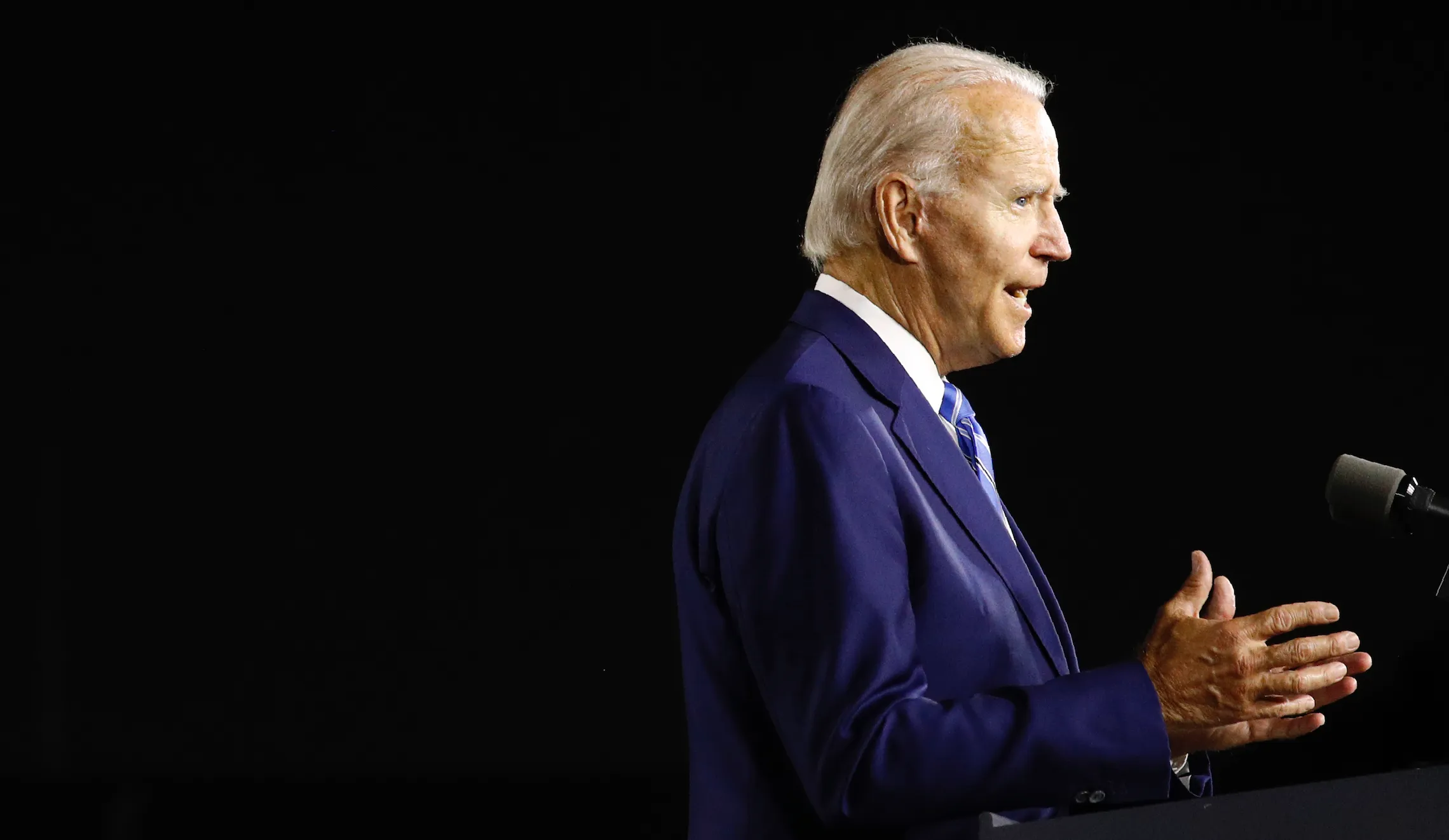
President Trump and Joe Biden’s slugfest isn’t the only competitive race in Texas this fall.
As the presumptive presidential nominees argue over whether the traditionally ruby-red state will be a battleground this 2020 election cycle, contests in an increasing number of congressional districts are tightening less than four months out from Nov. 3.
Recommended Stories


The Cook Political Report, an independent outlet, lists Texas’s 22nd and 24th districts as Republican toss-ups after Republican Reps. Pete Olson and Kenny Marchant announced they’re retiring after this year. On Friday, they added Republican Rep. Chip Roy’s seat in Texas’s 21st District.
While Democrats are defending Reps. Lizzie Fletcher and Colin Allred in Texas’s 7th and 32nd districts, Texas’s 23rd District presents the party’s best pick-up opportunity after Republican Rep. Will Hurd revealed he wouldn’t be seeking reelection. Hurd’s district, spanning a swath of the United States-Mexico border running hundreds of miles, now leans Democrat.
Republicans also want to hold on to Rep. Michael McCaul’s seat in Texas’s 10th District and Reps. Dan Crenshaw’s and John Carter’s in Texas’s 2nd and 31st districts, respectively. The first race is rated as leaning Republican, while the latter are likely GOP contests.
But the close national competition for Texas’s 38 electoral votes, second only to California’s 55, could have run-on effects down ballot. Democrats are eyeing the seats as a way of padding the House majority they won in 2018. House Republicans would need to win about 19 seats nationally to retake the majority, which in a 435-member chamber seems plausible but is actually considerably more difficult with the bulk of districts drawn to favor one party or another.
Biden, the presumptive Democratic presidential nominee, trails Trump by an average of 0.2 percentage points, according to RealClearPolitics‘s count, and 0.3 points, according to FiveThirtyEight. The last time Texas narrowly backed a Democrat was Jimmy Carter in 1976 in his successful White House bid.
The odds are in Trump’s favor after the incumbent won Texas in 2016 over Democratic rival Hillary Clinton by almost 9 points. Yet, only two years later, former House Democrat and White House hopeful Beto O’Rourke came within striking distance of beating sitting Republican Sen. Ted Cruz in their Senate bout.
Poll prognosticator Nate Cohn suggested this week after Texas’s run-offs that ground was shifting in three more districts as well: Texas’s 3rd, 6th, and 25th districts.
With the conclusion of the primaries in Texas last night, I want to flag a tier of districts that haven’t gotten a ton of attention from the race raters (perhaps for good reason, I haven’t been following the candidates) but seem ripe in this environment: TX3, 6, 10, 25
— Nate Cohn (@Nate_Cohn) July 15, 2020
Texas Democratic strategist Matt Angle agreed with Cohn despite the Senate’s head-to-head matchup between Republican Sen. John Cornyn and his Democratic opponent MJ Hegar falling short of Cruz and O’Rourke’s.
“While each of these districts are difficult for different reasons, if a wave builds, and MJ Hegar and/or Biden are competing hard in … Texas, each has a strong enough Democratic candidate that they could fall our way,” Angle said in an interview.
Freshman Republican Rep. Van Taylor represents Texas’s 3rd District, north and northeast of Dallas, and it’s less of a chance for Democrats. The district’s been in GOP hands since a 1968 special election, and Taylor won his seat during the 2018 midterms by 10 points. And he has more than $1 million in the bank compared to Democrat Lulu Seikaly.
Texas’s 6th District, south and southeast of the Dallas-Fort Worth metroplex region, is tighter, though it’s been a Republican stronghold since 1983. Republican Rep. Ron Wright is the incumbent, and he’s in his first term, too, after being swept into office by about 9 points two years ago. Wright has higher name recognition than Democrat Stephen Daniel but only slightly more cash on hand.
Meanwhile, Republican Rep. Roger Williams, who was Texas’s secretary of state under Gov. Rick Perry, represents Texas’s 25th District, which covers area from Fort Worth to Austin. Williams, a George W. Bush ally, is the only lawmaker who’s represented the district after it was redrawn ahead of his 2012 contest. He won reelection in 2018 by almost 9 points, and he’s out-fundraising 2020 Democrat Julie Oliver.
Angle blamed gerrymandering for Republicans’ Texas stranglehold.
“Now, with demographic changes through the decade along with Trump taking over the Republican Party, each of these districts have at least the potential to flip,” Angle said.
Other Democrats didn’t place as much emphasis on the top of the ticket. They touted groundwork starting at the beginning of 2019. Some contend that gerrymandering had helped since lines drawn 10 years ago created heavily suburban districts, which were now trending away from Trump. And Texans don’t split their votes, they said.
Avery Jaffe, a Texas spokesman for the House Democrats’ campaign arm, highlighted strong internal polling and fundraising. In Texas’s 6th District, for instance, Daniel was within a June survey’s margin of error. And in Texas’s 24th District, Democrat Candace Valenzuela this week was 6 points in front of Republican Beth Van Duyne.
“Texas Republicans have led the effort to strip away healthcare from hardworking Texans, and now they’re paying the price, as quickly changing suburban communities in Texas reject their special-interest funded agenda, force GOP retirements, and put previously safe Republican seats in play,” he said.
But Republican strategist Derek Ryan wasn’t convinced. Those districts were fairly safe, in his estimation, given their endorsements of Trump in 2016 and Texas’s Republican Gov. Greg Abbott in 2018.
“There are other districts in Texas that are more vulnerable and I doubt these would get much funding from national Democrat groups, but if things REALLY go south for Republicans in November, they could be in jeopardy,” he wrote in an email.
National Republican Congressional Committee spokesman Bob Salera was similarly dismissive.
“Democrats’ support for socialist agenda items like the oil and gas killing ‘Green New Deal’ and socialized medicine is completely toxic to voters, and Democrats are delusional if they think they can sell these policies in Texas,” he said.
