

Dan Eberhart, a Trump donor and oil services CEO, says the biggest hurdles for U.S. energy stem from Trump’s “disruptor” trade policies more than anything else.
“I’m a supporter of Trump, in general, but I think the trade policy is misplaced,” Eberhart told the Washington Examiner in an interview. “I think that Trump is a disruptor, and that’s how he’s had success in the past, and that’s how he’s intending to have success in the future.”
Recommended Stories


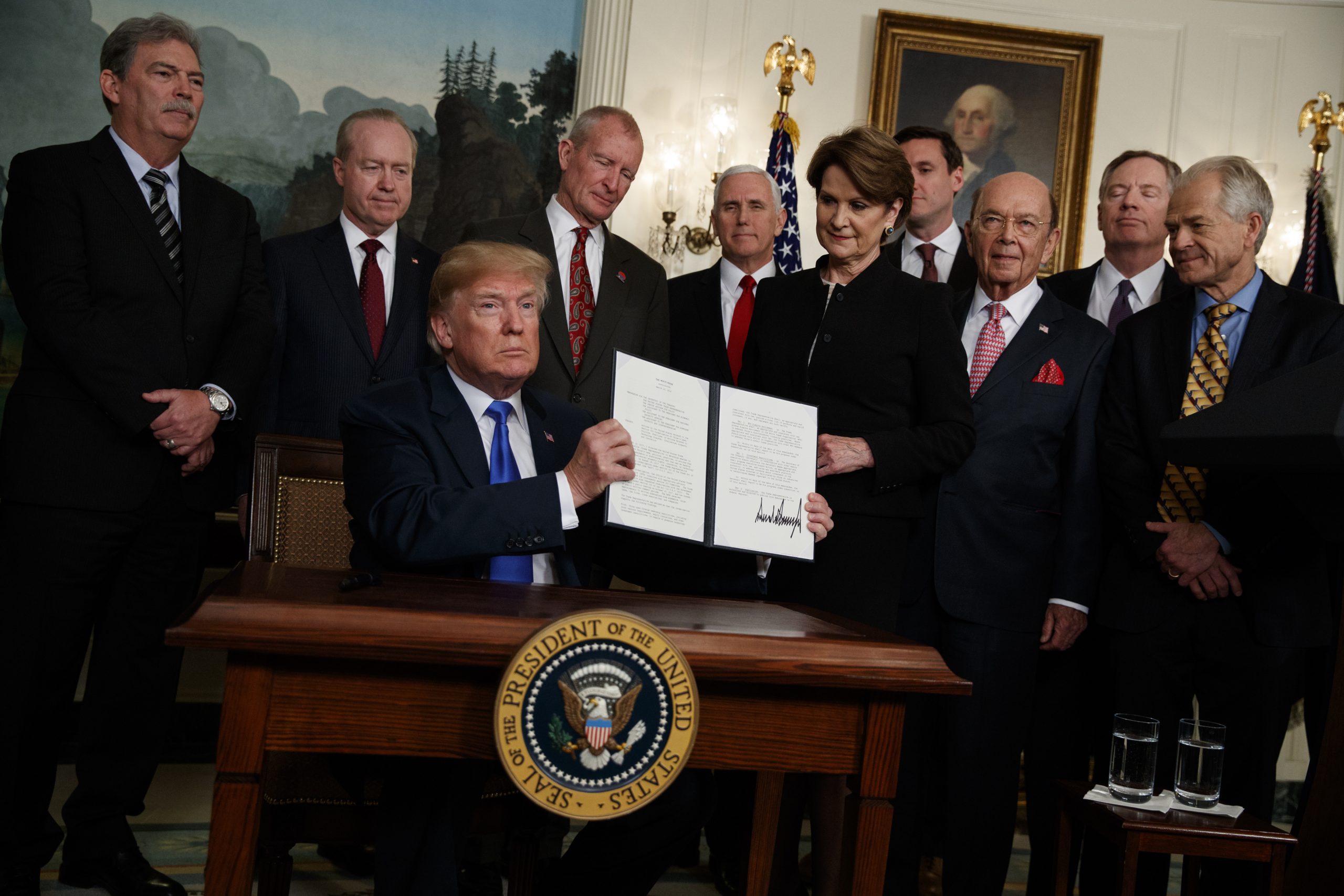
Trump has leveled a number of tariffs targeting specific manufactured goods from China, as well as other tariffs applied more broadly on steel and aluminum. Those measures have spurred retaliatory measures by China and the European Union, sparking concerns over a prolonged trade war.
“The economy is going well, why risk it ahead of the midterms with all this destabilizing trade stuff,” he said. “Just as an American, that’s what I feel like.”
Eberhart’s firm Canary, one of the top producers of oil well equipment in the country, is being affected by the president’s tariff policies in two ways.
“Number one, our supply chain,” Eberhart said. “I sense a reluctance to take increased volume by our suppliers in China. They’re not saying no, but they’re less eager to take more of our work.”
It’s a four to eight-month wait once they order new products, which can be a problem if demand for wellhead equipment is increasing, which it has.
“The second thing that is happening is just the general market,” he said. “We do stuff for oil companies, and the oil is sold on the domestic and international market. Right now, about a quarter of U.S. oil is sold to the export market, and about 20 percent of that is going to China.”
But that export market is “more and more at risk every day,” as China looks to retaliate against Trump’s tariffs by shifting away from U.S. crude oil and placing 25 percent tariffs on petroleum.
“China is the biggest customer and the most desirable market worldwide from an importer basis,” Eberhart said. “A lot of people are nervous as they’ve developed China as a customer. How is that going to play? You’ve already seen at least one refinery switch from U.S. crude to Iranian crude in China.”
“It is really worrying for a lot of my customers,” he said.
Trump has vowed to enforce a zero-tolerance policy for those who buy Iran’s oil after secondary sanctions against the Islamic republic kick in this coming November.
China appears to be ambivalent to the threat, while other countries are hedging their bets in other ways, according to Eberhart.
India, a top market for Iranian crude oil, “is reducing the crude they buy from Iran, and increasing the crude they buy from the U.S.,” he explained.
Eberhart said there are bigger things going on that could explain other reasons for India’s switch to U.S. crude.
OPEC’s decision to raise production did not have the intended effect of allaying market fears of price increases from cuts to Iran’s oil output, in addition to other major producers like Venezuela and Libya, according to Eberhart.
“On June 22, there was the OPEC meeting, and they said they were going to do a million barrels a day [increase], but all countries can’t increase their quota. So, it’s really a 600,000 to 800,000 barrel a day increase,” he explained.
“Well, oil gone up from $66 to $74 … since that meeting,” which means “the market wasn’t really that impressed with the increase.”
Oil demand is supposed to rise by as much as 1.5 million barrels per day. “So, when you look at an 800,000 barrel a day increase, it’s a little bit of yawn.”
Eberhart believes that the “market is really, really tight,” with very little flexibility to cope with major supply losses. “The shock absorbers for global supply disruptions, or increased demand as a result of worldwide growth are mostly gone.”
The federal government said something similar in its weekly petroleum analysis issued Wednesday, which said a lack of spare oil capacity among both Western and OPEC nations could lead to steep hikes in oil prices.
Libya, Venezuela, Iran, and Angola are all having oil production problems stemming mostly from political instability, while in Western countries production facilities can be spontaneously taken offline, leaving the market vulnerable to supply problems.
“There’s just not a lot of spare capacity for these kinds of supply disruptions, and we have synchronized world growth,” Eberhart said.
Other problems in the oil market stem from domestic problems with insufficient U.S. infrastructure to move oil around quickly to make up for any shortages.
“There’s a pipeline capacity problem,” Eberhart explained. “Basically, everyone stopped these capital projects, and now they are starting them again now that oil is high, but they’re 24-month projects.”
That means for oil producers, especially in the Permian shale region in Texas, there are very poor prospects for getting oil to market quickly.
“I think U.S. shale can solve the problem, but there is an infrastructure deficit in this country that’s going to take a couple of years to fix,” he stated.
Eberhart also said there are other problems beyond oil dynamics that frustrate him when it comes to infrastructure development.
On the electricity side, he is “frustrated” by Trump’s desire to bailout coal and nuclear power plants, which are struggling to remain economic because of increased competition from low-cost natural gas power plants.
“Obama’s war on coal is becoming Trump’s war on natural gas from where I sit,” he said. “Obama was against coal, but it seems Trump is against natural gas by virtue of his supporting coal and nuclear.”
“I think the administration should be supporting innovation and American ingenuity, not picking winners and losers,” he added.
Eberhart makes no bones about it: “Coal is a dirty fuel that the market has largely rejected,” he said. “In terms of trying to build a broader coalition, he seems to focus too much on it.”
He explained that utilities are increasingly turning to natural gas to generate electricity “because of the vast shale supply, the low prices, and the lower emissions,” which is “ultimately bad for coal.”
Natural gas currently generates the largest source of electricity in the U.S., which continues to take market share away from coal, according to federal data.
Despite these policy concerns, Eberhart believes things are “looking better and better for Republicans” in the congressional midterm election races.
He thinks Trump’s nomination of Brett Kavanaugh to the Supreme Court has done a lot of good in eroding Democrats’ ammunition for a “blue wave” of election victories in November.
Kavanaugh’s nomination is “basically washing away the enthusiasm gap between Republicans and Democrats,” he added.
“I think Kavanaugh is good, but [Trump] picked a swamp guy that’s a Bush guy. It’s kind of amazing, right?” he said, explaining that although Trump can be seen as “reckless,” this pick is “right down the middle.”
Trump “is really a regular Republican on these judicial appointments,” he said.
