

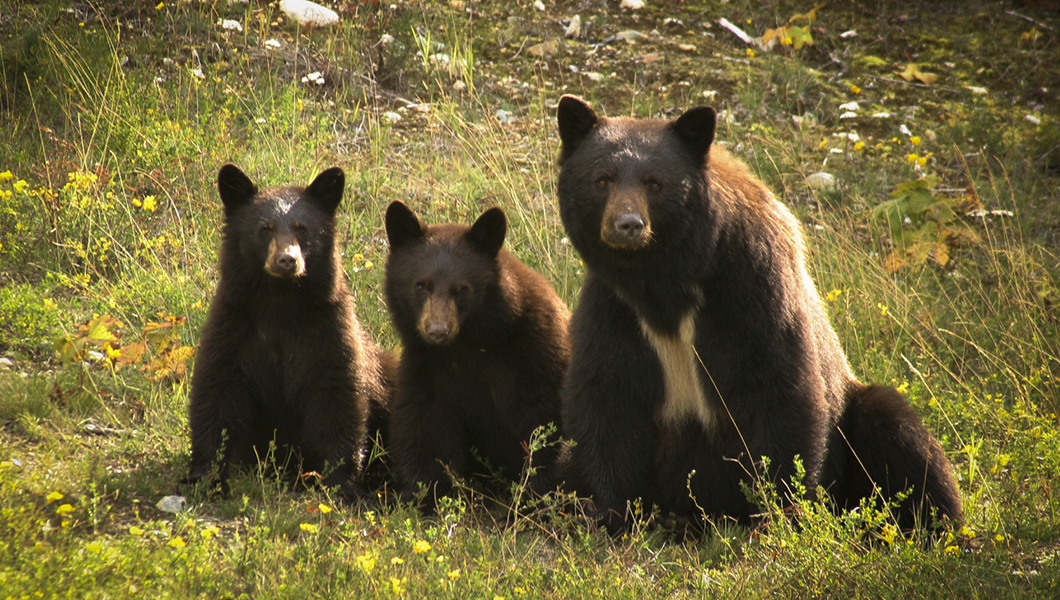
News that President Trump had signed legislation avoiding a second government shutdown, that considerable progress was being made in trade negotiations with China, and that Fed Chairman Jerome Powell had softened his position on future interest rate increases harkens once again to the “Goldilocks economy,” which for a time was just about right, and the “three bears” that brought it to an end, trade and monetary policy and the shutdown.
It also reminds me of a wonderful children’s game, “Ain’t No Bears Out Tonight.”
Recommended Stories


The outdoor game was a summertime favorite in my 1940s Wilmington, N.C., neighborhood. Sparked by childhood imagination and a few older children who loved to torment younger ones, the game included a designated home base where one was “safe” from harm and three or four older children who were designated as “bears.”
Players counted to 10 with their eyes closed while the bears ran and hid behind trees, shrubs, and parked automobiles. Ready to venture forth, the younger ones, woefully frightened and sometimes holding hands, began their timorous walk in the dark, all the while shouting “Ain’t no bears out tonight. Poppa killed them all last night.”
While the last word was still echoing in the darkness, one of those bears would come roaring out of hiding, capturing a screaming child and thereby reducing the search team by one and scaring the wits out of all the others. Survivors would rush for home, never looking back, hoping to escape for another round of the game. This continued till there were no survivors.
What does this have to do with Goldilocks and our economy?
Recall that until December 2018, keen observers of a then just-right U.S. economy began to call it “Goldilocks.” With tax cuts and regulatory reform juicing the economy, there was high GDP growth, low inflation, plummeting unemployment, rising consumer confidence, and a soaring Dow Jones. Then came bear number one, the trade war with China; bear two, a Fed move to raise rates; and to top that, bear three, a 35-day government shutdown. These government-sponsored bears sent Goldilocks running.
Suddenly, it seemed, the gains from tax cuts and regulatory rollbacks were eroding away thanks largely to policy makers.
Of course, no economic story is quite that simple. The independence of the Fed means that interest rate policy changes can sometimes unexpectedly rain on an economic party indulging on cheap-money punch. Sometimes the Fed gets it right, and sometimes it misses the policy target.
On the other hand, we’ve known about the losses associated with tariffs and other trade barriers since at least 1776, when Adam Smith published his Wealth of Nations. We understand that government-produced patents, passports, construction permits, flight control, and merger approvals grease the rails of the economy, meaning government shutdowns carry a high cost.
So have government leaders, including the Fed, learned from all this? Have the bears been routed?
These are big questions, and the early returns appear to be positive thanks to those headlines about ending the shutdown, trade progress, and lower interest rates. Three bears have scattered to the woods.
But uncertainty takes time to fade away, so Goldilocks, much like us kids playing “Ain’t No Bears Out Tonight,” will probably remain cautious and hesitant for a while before resurfacing. Now, we wait and see. If policy uncertainty remains low for a few months, consumers, employers, and investors may venture forth again.
Let’s hope Washington policymakers avoid the temptation to create more bears.
Bruce Yandle is a contributor to the Washington Examiner ‘s Beltway Confidential blog. He is a distinguished adjunct fellow with the Mercatus Center at George Mason University and dean emeritus of the Clemson University College of Business and Behavioral Science. He developed the “Bootleggers and Baptists” political model.
