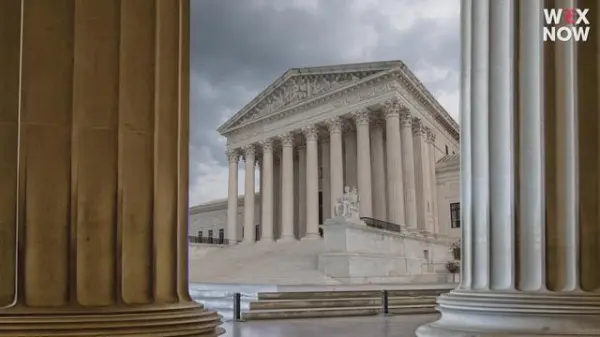
Chief Justice John Roberts questioned why someone should expect their location data to be private, if they are already voluntarily sharing it with companies, such as Google, in a case over whether law enforcement’s broad searches of the location data for a specific area during a specific time were constitutional.
The Supreme Court heard arguments on Monday in Chatrie v. United States, where it examined whether a geofence warrant violated Okello Chatrie’s Fourth Amendment right against unreasonable searches and seizures. A geofence warrant is a request made by the government to a technology company, such as Google, in this case, for information about devices that were physically within a certain geographic parameter during a specific period of time. The data from the geofence warrant used in Chatrie’s case was able to connect him to a bank robbery, for which he was convicted.