The West thought Kim Jong Un was trapped. Then came Putin

Published August 3, 2026 10:00am ET


There is an old adage in international politics: There are no eternal friends, nor eternal enemies — only eternal national interests. 

North Korea and Russia’s recent, rapid rapprochement brings this time-honored maxim back to the forefront. 

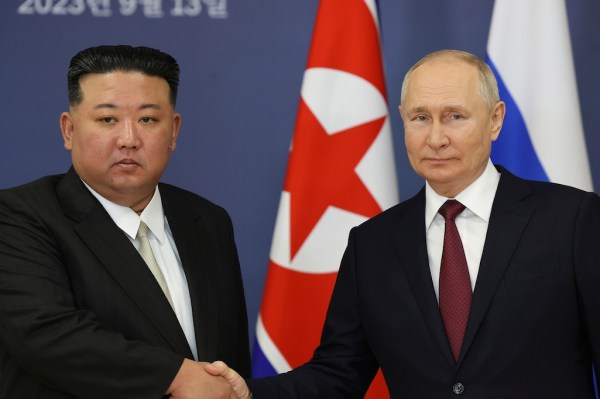
North Korea’s Foreign Minister, Choe Son Hui, recently visited Moscow to hold talks with her Russian counterpart and met with Russian President Vladimir Putin to discuss bilateral cooperation. Both sides reaffirmed their “Comprehensive Strategic Partnership” and publicly stated their will to deepen cooperation across political, economic, and military spheres. 

On the surface, this might look like yet another routine diplomatic event. However, in international politics, one must read the background rather than simply count the meetings. 

Just a few years ago, relations between Pyongyang and Moscow were not nearly this close. For a long time, the center of North Korea’s diplomacy was China. While Russia maintained a steady role on Korean Peninsula issues, North Korea-Russia ties were not considered a variable capable of shifting the dynamics of Northeast Asia. 

The war in Ukraine, however, severely disrupted this balance. 

As the war prolonged, Russia began to find itself increasingly isolated from the established international order. Western economic sanctions and diplomatic pressure drove Moscow to seek new partners. Simultaneously, trapped under heavy international sanctions, North Korea was in desperate need of a diplomatic breakthrough. 

Experiencing isolation for different reasons, the two nations naturally became indispensable to one another. 

Russia needed military supplies and strategic cooperation. North Korea needed a diplomatic backer and space for economic collaboration. Reality superseded ideology. 

Many prefer to explain alliances through the lens of values and ideologies, assuming that democracies cooperate with democracies and socialist states stick together. Of course, this explanation is not entirely wrong. Yet the history of international politics is far more complex. 

During the Cold War, the U.S. joined hands with communist China to check the Soviet Union. During World War II, liberal democracies cooperated with the Soviet Union to counter Nazi Germany. Both cooperation with enemies and conflict with friends have always unfolded under the banner of national interest. 

North Korea and Russia’s relationship must be understood in this exact context. Today, North Korea is expanding its diplomatic options through Russia, while Moscow seeks to secure a new strategic lever in Northeast Asia through Pyongyang. They are growing closer, not because they share every single interest, but because at this exact moment, they are each other’s most necessary partner. What deserves attention here is North Korea’s diplomatic approach. Many view North Korea solely as a closed and isolated state. To be sure, internally, North Korea remains one of the most repressed and closed systems in the world. But its diplomacy is not closed. 

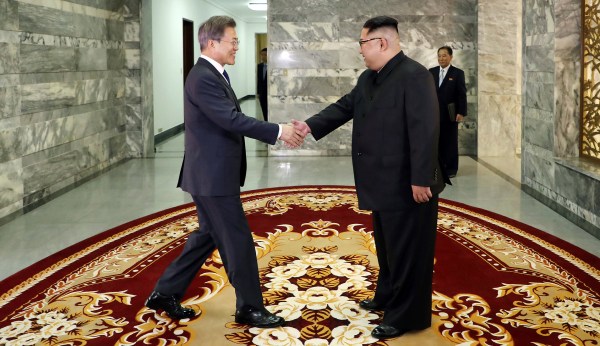
On the contrary, today’s North Korea is executing highly pragmatic diplomacy. While maintaining its traditional relationship with China, Pyongyang is expanding strategic cooperation with Russia, trying to maximize its usable diplomatic space amid a rapidly shifting international order. This is by no means an accident. The Kim Jong Un regime is opting for far more pragmatic diplomacy than its predecessors. Scenes continually demonstrate that state survival and national strategic interests take precedence over ideological slogans. 

The same goes for Russia. 

Moscow is expanding cooperation with North Korea not out of deep trust, but because Pyongyang represents a necessary strategic asset under the weight of international sanctions. 

Thus, explaining the recent North Korea-Russia relationship simply as “getting closer” falls short. 

The more profound change lies within the international order itself. While the Cold War divided the world into two axes — the U.S. and the Soviet Union — today’s international community is entering a complex, multipolar era. Nations are forging diverse cooperative relationships based on their own national interests rather than remaining locked within a single bloc. North Korea is moving within this very current. 

It cooperates with China while expanding strategic ties with Russia, maintaining limited contact with other nations as well. This can be seen as calculated diplomacy designed to actively exploit shifting international conditions. Of course, one cannot guarantee that this cooperation will last forever. There are no eternal alliances in international politics. 

When interests shift, diplomacy shifts. When strategies change, relationships change. Today’s partner becoming tomorrow’s competitor is a familiar occurrence in international politics. Nevertheless, one fact remains clear. 

The ongoing North Korea-Russia cooperation is not a mere diplomatic event but the result of converging interests amid a changing global order. We often try to understand North Korea through a fixed image: a closed state, an isolated nation, an unpredictable actor. 

Yet today’s North Korea is utilizing the international climate far more proactively than before. 

THE TINY ISLANDS THAT COULD DRAG AMERICA INTO WAR WITH CHINA

Whether this gamble will succeed remains to be seen. But at least one thing is certain: Today’s Pyongyang is no longer a passive observer of shifting global dynamics. Rather, quietly yet relentlessly, it is maneuvering to find the most advantageous position in a changing world. 

International politics does not run on emotion. What moves a nation is neither trust nor friendship. It is interest under the name of national interest. And the recent relationship between North Korea and Russia once again demonstrates that this oldest principle of international politics remains as valid as ever.

Park Joonhye is a research fellow at the Institute for Far Eastern Studies, Kyungnam University. She received her master’s and doctorate in politics and unification studies from the University of North Korean Studies. Her research interests include North Korean politics, military security, society and culture, nuclear policy, and unification discourse. She has published peer-reviewed articles in KCI-indexed journals and has written numerous newspaper and policy columns in South Korea. Her recent English opinion articles on North Korea have appeared in United Press International. Her major publication includes A Study on the Drivers of Nuclear Possession and Incentives for Nuclear Abandonment under the Kim Jong-un Regime.