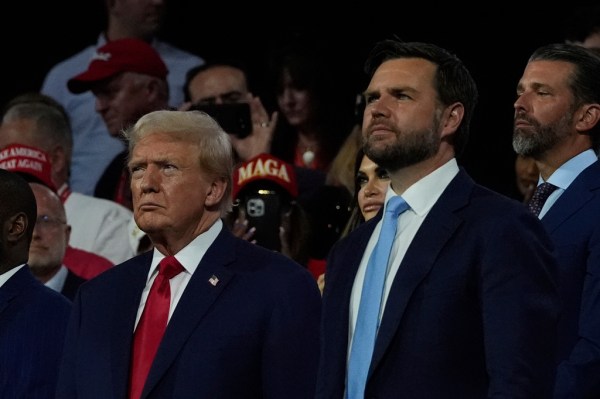
President Donald Trump’s decision to curtail the Ulchi Freedom Shield exercises exposes a foundational pathology within the U.S.-South Korea alliance. For decades, Washington has tolerated a dangerous asymmetry: Seoul expects the protection of 28,500 American troops, continuous joint training, and billions in U.S. taxpayer subsidies, yet blinks at broader global threats.
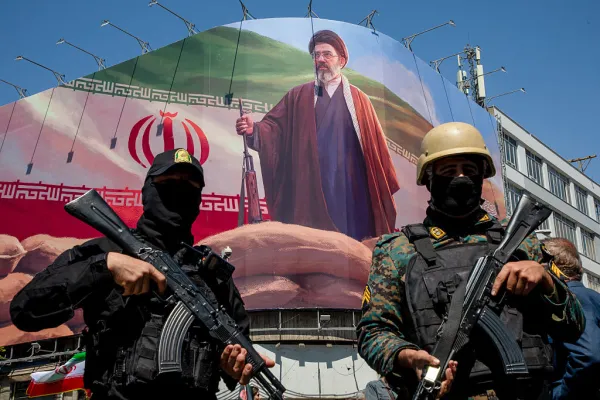
When Washington requested South Korean support against Iranian aggression, Seoul demurred, choosing diplomatic fence-sitting over alliance solidarity. This strategic myopia is unsustainable, particularly now that Trump has declared U.S. sovereignty over the Strait of Hormuz following the campaign against the mullahs’ regime.
Recommended Stories
South Korea’s strategic free-riding ignores a brutal geographic reality: 70 percent of its crude oil imports transit the Strait of Hormuz, a critical chokepoint it refuses to help defend. America’s current naval blockade already restricts unapproved passage, but formalizing its sovereignty over this waterway mirrors the 1903 Hay-Bunau-Varilla Treaty. For three-quarters of a century, the United States exercised total authority over the Panama Canal Zone to secure global commerce and extract decisive strategic advantage. Hormuz demands identical clarity today. Such a disparity creates a severe moral hazard: while South Korea’s industrial base relies on this corridor more than any OECD rival, American taxpayers still shoulder a lopsided $6 billion annual bill to secure the peninsula.
The era of the one-way security subsidy must end. If Seoul wishes to remain under the American nuclear and conventional umbrella, it can no longer outsource the risk of keeping its own refineries supplied. To maintain the integrity of the Mutual Defense Treaty, South Korea must deploy hard power to help enforce security in the Gulf. Moving forward, the Trump administration should condition the next Special Measures Agreement and the resumption of full-scale military exercises on three nonnegotiable security pillars.
First, Seoul must permanently mobilize a “Hormuz Autonomous Enforcement Brigade.” This forward-deployed asset should integrate 2,800 Republic of Korea special forces with premier AI engineers and drone operators from Samsung and Hanwha. Operating unmanned surface vessels and loitering munitions under exclusive American operational command from U.S.-controlled Gulf islands, this brigade will transform South Korea’s military technological edge into permanent, on-site enforcement — directly freeing American personnel for higher-priority Indo-Pacific missions.
Second, South Korea must integrate its technological ecosystem into the alliance’s architecture via a “Hormuz Data Sovereignty Initiative.” This mandate requires Seoul’s premier semiconductor firms to transfer classified sensor and satellite algorithms into a U.S.-owned undersea and orbital surveillance grid. Crucially, to prevent further drain on American resources, every Korean technological contribution must be funded by redirecting South Korea’s national pension funds and defense-industrial offsets, rather than through new U.S. appropriations.
WHAT IF NETANYAHU SURRENDERED? ISRAEL’S REAL CRIME IS REFUSING TO DIE
Third, Seoul must weaponize its leverage through a commercial-territorial mandate. Accordingly, major South Korean shipping conglomerates must register a fixed percentage of their tanker and LNG fleets under a U.S. Hormuz Authority flag of convenience. These vessels would collect transit fees set exclusively by Washington and deploy private Korean security details to conduct on-water inspections. This framework transforms private Korean commercial power into a self-financing instrument of maritime control, generating revenue for both capitals while reinforcing the practical, day-to-day enforcement of the chokepoint.
Diplomatic platitudes will no longer suffice. Seoul’s desperate hope that Washington resumes futile negotiations with North Korea to evade these global maritime obligations is an absolute strategic disgrace. Such a posture ignores reality: South Korea’s economic lifelines remain tethered to the Strait of Hormuz. The reduction of joint drills proves American protection is not automatic. Seoul must embrace these hard mandates and actively help hold the line, or watch its American security privileges evaporate.
Jose Lev Alvarez is an American–Israeli scholar specializing in international security policy. A multilingual veteran of the IDF special forces and the U.S. Army, he holds three master’s degrees and is completing a Ph.D. in Intelligence and Global Security in the Washington, D.C., area.