

In Focus delivers deeper coverage of the political, cultural, and ideological issues shaping America. Published daily by senior writers and experts, these in-depth pieces go beyond the headlines to give readers the full picture. You can find our full list of In Focus pieces here.
Barack Obama is a high-minded, post-partisan healing figure in American politics. Just ask him.
Recommended Stories


Over the years, the former president has developed a penchant for delivering political sermons to the masses, in whom he often seems disappointed, wrapping himself in the flowery language of earnest good governance and urgent principle.
It’s a facade.
Consider his “principled” stands on keeping big money out of politics, the Senate filibuster, and gerrymandering. He has taken both sides of each issue, conveniently aligning with his own political tribe’s perceived power advantage at every turn. He’ll insist that one position is vital for American democracy, then seamlessly adopt the exact opposite position, articulated just as self-righteously.
Untangling this web of incoherence and contradiction is actually rather simple: Identify the stance that is perceived in any given moment to benefit Democrats or “progressive” ideology, no matter how fleeting, and you’ve found Obama’s current stance. Obama’s firm convictions on such matters are always subject to change, of course, with abrupt changes announced amid flourish-filled rhetorical renovations.
In 2008, Obama was running for the presidency. A newly elected senator, he’d said just a few years earlier that he wouldn’t seek the White House in the next cycle because “I am a believer in knowing what you’re doing when you apply for a job.” His self-reflection continued, “I think that if I were to seriously consider running on a national ticket, I would essentially have to start now, before having served a day in the Senate. Now, there are some people who might be comfortable doing that, but I’m not one of those people.”
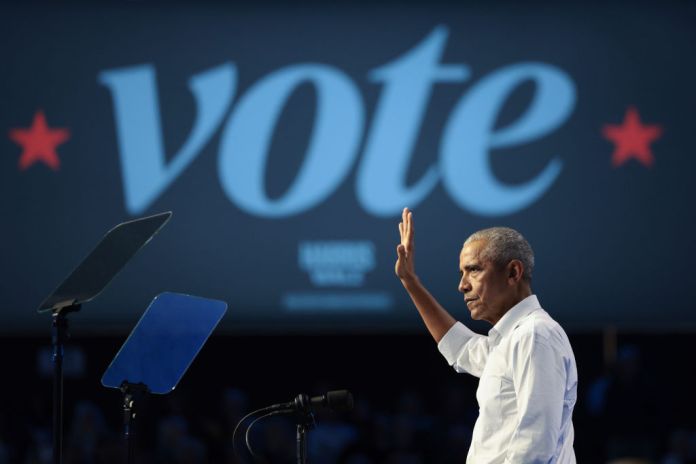
He was, in fact, one of those people. During the ensuing campaign, he solemnly and repeatedly vowed to accept taxpayer-funded public financing in a general election setting. This was his long-standing position, you see, because it furthered the critical goal of reducing the impact of money in American elections.
“I strongly support public financing,” Obama intoned, later adding that he was “a big believer in public financing.” When Obama declares himself a “believer” in something, beware. The latter quote was offered during his presidential campaign, by the way.
Then there was this New York Times passage from the very same campaign:
"Senator John McCain joined Senator Barack Obama on Thursday in promising to accept a novel fund-raising truce if each man wins his party's presidential nomination. The promises by Mr. McCain, Republican of Arizona, and Mr. Obama, Democrat of Illinois, are an effort to resuscitate part of the ailing public financing system for presidential campaigns. … On Thursday, a spokesman for Mr. McCain said that he would take up Mr. Obama on a proposal for an accord between the two major party nominees to rely just on public financing for the general election.”
“Promises” are cheap, it seems, especially when they stand between Obama and his personal ambition and ideological goals. John McCain ultimately maintained his commitment to the pledge, which fortified his long-term convictions on the issue. Obama, correctly recognizing that he could blow the doors off Republicans in fundraising, awkwardly reversed his position and galloped to a dominant victory in the money race and into the Oval Office. He blamed a “broken” system for his decision, and Republicans, of course, while pretending he still truly supported the public financing system he’d just rejected. Obama raised nearly $750 million that cycle, according to Open Secrets, leaving McCain’s $368 million in the dust. The rest is history.
On the Senate filibuster, Obama was a fan and frequent practitioner of that legislative tool, which allows the minority party to block votes. One might even say he was a “big believer” in the filibuster. When Senate Republicans, then in the majority, considered ending elements of the filibuster in 2005 due to unprecedented Democratic obstructionism, including by Obama himself, the freshman Illinois senator warned against it, stating that each of his colleagues “knows that if the majority chooses to end the filibuster … the fighting, the bitterness, and the gridlock will only get worse.” Neither party should be able to “change the rules in the middle of the game so they can make all the decisions while the other party is told to sit down and keep quiet,” he said.
Obama joined dozens of filibusters during his brief stint in the upper chamber, including a then-extreme, and failed, filibuster against the Supreme Court nomination of Samuel Alito.
A decade later — wouldn’t you know it? — Obama had determined that he “regretted” his anti-Alito filibuster. Why? Because Republicans were threatening to use the maneuver to thwart Obama’s pick to fill a Supreme Court seat. His White House press secretary explained that the president’s previous filibuster against a Supreme Court nominee had merely been a “symbolic vote” that he disavowed, in retrospect.
By Joe Biden’s presidency, Obama had decided that not only was he against filibusters, but the tool itself was a racist “Jim Crow relic.” Again, Obama had personally and repeatedly availed himself of this supposed vestige of racism, dozens of times, when it suited his desired outcomes. The about-face was framed as having been executed “for democracy,” naturally, just as his prior, opposite stance was similarly civic- and democracy-minded. Until it wasn’t.
Today, Obama is presumably very pleased that his political party is using the filibuster to block passage of various versions of the SAVE Act, a voter integrity measure the former president has loudly and publicly opposed as a method of “voter suppression.” One imagines his comfort level with this use of the “Jim Crow relic” will surely expire the next time it’s standing in the way of legislation he’d like to see become law. It’s all very nuanced and principled.
And then there is the matter of gerrymandering in the formation of congressional district maps. Obama was virulently opposed to the practice, as he often informed the world.
“For too long, gerrymandering has contributed to stalled progress and warped our representative government,” Obama proclaimed, in one of multiple anti-gerrymandering jeremiads.
We can’t have progress stalled, or our representative government warped, now, can we? But when Democrats decided they “needed” to gerrymander Virginia’s notably fair and representative districts into one of the least fair maps in the nation, guess who endorsed gerrymandering? It pained him to do it, Obama claimed, but the stakes were too high to maintain his pristine position. So the power-minded interests of his party and tribe won. Again. As always.
Obama became the veritable face of the Democrats’ shockingly dishonest pro-gerrymandering campaign, starring in ads that ran across the state for weeks on end. Literally the week after Obama’s preferred partisan gerrymandering power grab prevailed, very narrowly and perhaps temporarily, in Virginia, he was back to opposing gerrymandering. Sort of.
The Supreme Court announced an anticipated decision pertaining to Section 2 of the Voting Rights Act, eliminating gerrymandering on the basis of race. Obama was appalled and posted a tendentious condemnation on social media — like any good “progressive,” Obama is against racial discrimination, except when he’s for it, in affirmative action, college admissions, gerrymandering, etc.
But part of this denunciation was a complaint that the court’s ruling against institutionalized racism in the form of racial gerrymandering would now allow state legislatures “to gerrymander legislative districts” in ways that Obama doesn’t like. He prefers his gerrymanders racial, thank you very much. Except when he strenuously opposes gerrymandering in general, a “principle” not to be confused with his outspoken and deeply principled support for gerrymandering that benefits Democrats. Heroic stuff.
WAKE UP, BLACK AMERICA. EXCELLENCE IS OUR INHERITANCE
It would be far more respectable for Obama to simply admit that he actually does not float above the grubby partisan fray, and that he’s a power-focused hack like so many others in politics. Such a concession would have the benefit of being honest, but it would violate Obama’s phony and precious self-image, so the hypocritical and ever-shifting “For Democracy” lectures will continue.
Alas, “For Democrats” would be more authentic branding for his thinking and motivations.
