

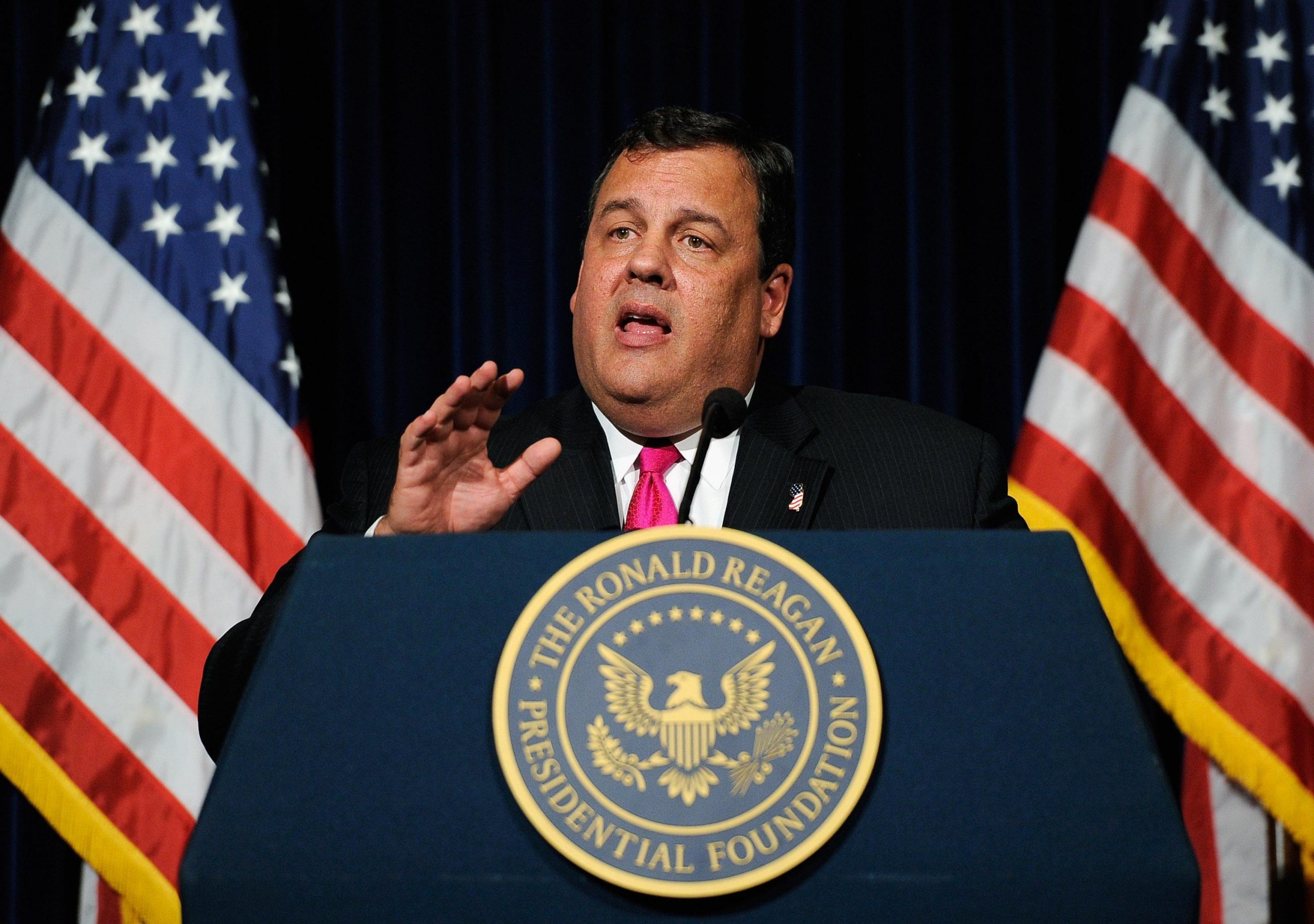
The Republican presidential field has been frozen in place this weekend while New Jersey Gov. Chris Christie ponders whether to join the race. Christie is the latest potential candidate to cast a shadow over the current field of hopefuls and the fact that influential Republicans are urging him to run underscores the persistent dissatisfaction conservatives feel about the choices now before them — namely Texas Gov. Rick Perry and former Massachusetts Gov. Mitt Romney.
“Perry stumbled out of the gate and people aren’t happy with Romney,” University of Iowa political science professor Timothy Hagle told The Washington Examiner. “It may be very seductive to have these big-name people whispering in your ear and saying, ‘You’re the one, we need you.’ This may be the kind of thing that would lure Christie into the race.”
Christie has been lauded by the party’s rank and file for taking on New Jersey’s powerful public employees unions since becoming governor in 2010 and a Rasmussen Reports survey released last week showed Christie statistically tied with President Obama in a hypothetical general election match-up.
But Hagle and other political experts say they believe Christie won’t join the race, despite reports that former President George W. Bush, a former Cabinet member, prominent business leaders and even Christie’s family, are telling him to get in.
“Christie has said repeatedly that he’s not going to run,” said GOP strategist Jim Ellis. “And I believe him.”
Christie has repeatedly rejected suggestions that he run, declaring himself ill-prepared for the job. “I don’t feel ready in my heart,” he told ABC News in April.
“That would come back to haunt him,” Ellis said, most likely in opponents’ campaign ads.
If Christie does decide to run, he would be facing a primary schedule that was accelerated considerably after Florida decided Friday to move its presidential primary to Jan. 31. That will force four early states — Iowa, New Hampshire, South Carolina and Nevada — to move their primaries and caucuses from February to early January, to remain ahead of Florida.
“I think the primary calendar makes it very difficult for a late-comer like Christie to do anything,” Ellis said, because Christie would not have adequate time to raise money, build ground operations and campaign in the early states.
Nor would there be much time to think through a campaign agenda and prepare for debates.
Perry, who leapfrogged to the top of the polls after joining the race in August, has seen his front-runner status fade after several weak debate performances and difficulty explaining his support for college tuition breaks for illegal immigrants.
Democratic strategist Doug Schoen said Christie may stay out of the race because of his health, pointing to a recent asthma attack that landed him in the hospital.
If Christie decides not to run, Republican strategists say, the GOP field will remain wide open unless Perry can improve his debating skills or Romney can assuage conservative fears about his support for the Massachusetts health care law and his history of switching positions on critical conservative issues like on gun control and abortion.
If Perry or Romney continue to fall short, another candidate could be waiting in the wings. On Friday, sources close to former Arkansas Gov. Mike Huckabee, a 2008 candidate, reported that he, too, is now reconsidering running again.
