

Israel and Hezbollah are already trading strikes despite the Israeli government signing a ceasefire with Lebanon just a day ago, causing many to question the purpose of the “last chance” agreement.
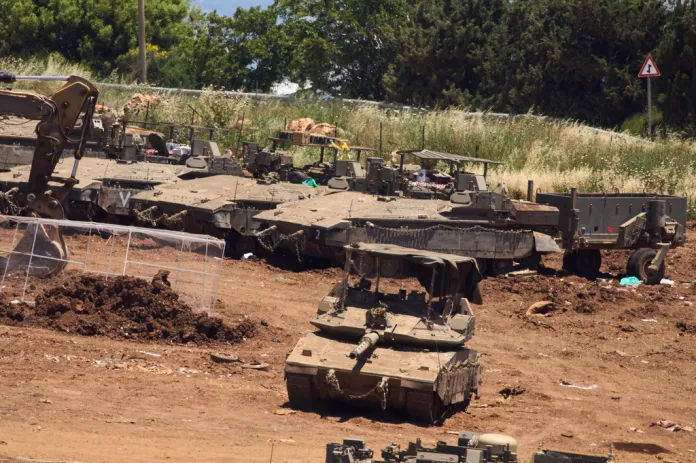
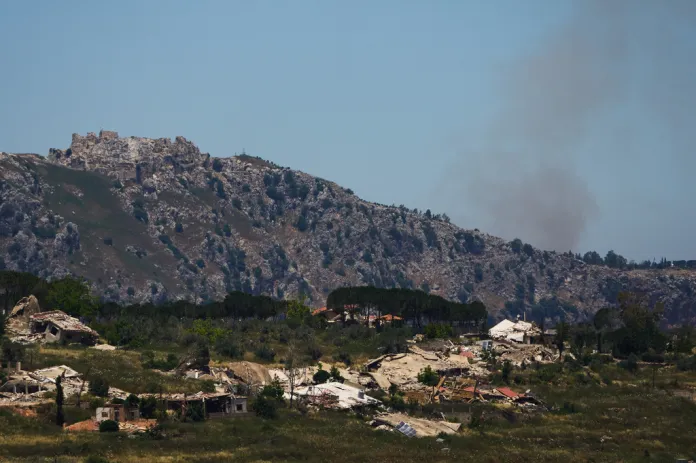
At the same time, Israel is beginning efforts to move troops out of the Debbine area in southern Lebanon and working to prop up “pilot zones” where the Lebanese military is expected to take operational control. It is unclear what exactly either government is envisioning, but experts say the main purpose is likely to bolster state-to-state solidarity and ice Hezbollah out of the conversation entirely.
Recommended Stories


The ceasefire, mediated by the United States, is contradictory in nature. It is ostensibly aimed at a permanent peace but allows for Israeli military operations in southern Lebanon to continue. It is “contingent on a complete cessation of Hezbollah fire and the evacuation of all Hezbollah operatives” from south of the Litani River, but excluded Hezbollah from the negotiations — though the terrorist group has since made clear it would not have been interested anyway.
“As long as the occupation exists, the resistance will continue,” Hezbollah leader Naim Qassem warned following the announcement. His group has rejected the ceasefire entirely, calling it “a road map for the annihilation of a section of the Lebanese people and the enslavement of the rest.”
A key line of the document signed by the two governments indicates a deeper purpose: “All countries reaffirmed that the future of the relationship between Israel and Lebanon must be decided by the two sovereign governments. They rejected any attempt, by any state or non-state actor, to hold Lebanon’s future hostage.”
Those “state” and “non-state” actors are clear references to Iran and Hezbollah, Tehran’s regional proxy.
“This agreement is state-to-state, and this is why the recent negotiations are good — because in the past, Lebanon was never able to negotiate directly with Israel,” Andrew Tabler, a senior fellow of the Washington Institute focusing on Levant politics, told the Washington Examiner. “The idea of these talks was that these direct negotiations would undermine Hezbollah, and it would allow for the forging of a viable agreement.”
Lebanese Prime Minister Nawaf Salam announced Thursday that the Lebanese army is beginning to deploy to the presanctioned “pilot zones” as the “first phase” of hopefully ending the violence. The Lebanese forces are expected to maintain control over these zones and ensure “non-state actors” such as Hezbollah are neutralized and disarmed.
Salam said the Lebanese deployment to pilot zones “does not prejudice our right to a full (Israeli) withdrawal, but brings us closer to it.”
Tabler said that while the arrangement has been dubbed a “ceasefire,” it is “very much like a bilateral de-escalation agreement” in practice.
Aaron Miller, a senior fellow in the American Statecraft Program at the Carnegie Endowment for International Peace, similarly told the Washington Examiner that the ceasefire is, in reality, more of a de-escalation campaign.
“Ceasefires are made to be broken,” Miller said. “Without monitoring, without verification, without a fundamental commitment from Hezbollah and the Israelis, you cannot have a sustainable ceasefire — and you don’t have that.”
Miller speculated that because “the Iranians said no negotiations if you strike Beirut,” President Donald Trump “picked up the phone” and got Israeli Prime Minister Benjamin Netanyahu to agree not to march on the Lebanese capital — seeing such a scenario as counterproductive to peace in both Lebanon and Iran.
The White House has been mired in endless negotiations with Tehran since the beginning of Operation Epic Fury in February. Iran has repeatedly insisted that any peace negotiations to open the now-shuttered Strait of Hormuz would require a ceasefire in Lebanon as well.
Israel has appeared largely unconcerned with the effects of its campaign on the wider Iranian negotiations, with its military reportedly preparing to move north toward Beirut before Trump spoke to Netanyahu and demanded he abandon such course of action.
The president affirmed in an interview earlier this week that he had accused the Israeli prime minister of being “f***ing crazy” during their conversation.
AYATOLLAH SAYS IRAN HAS ‘DEFEATED’ US AS TRUMP, RUBIO ACKNOWLEDGE HE’S PLAYING ACTIVE ROLE IN REGIME
Miller said that if the Lebanese armed forces are able to manage these pilot zones, it would “strengthen the central government, allow some villagers to return, and on the whole, be shot in the arm for the Lebanese government.” But he is not sure it’s possible, “given the flare-up and fighting that’s almost certain to occur.”
He added that officials should “be under no illusions” that the Lebanese military is capable of taking on “the demilitarization of Hezbollah any more than the Palestinians could take on the demilitarization of Hamas.”
