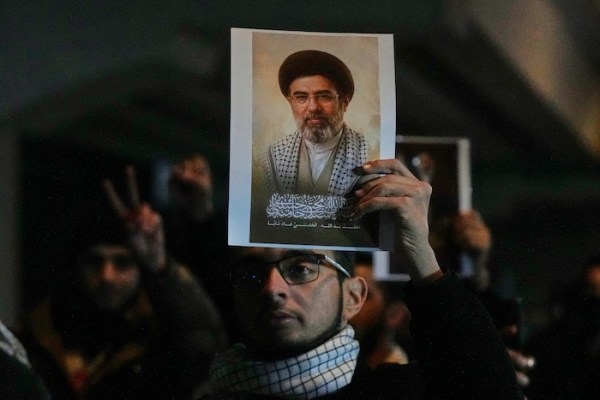
Three days. That is how long it took Washington to go from warning that Iraqi government elements are providing cover for Iran-backed militias to congratulating Tehran’s hand-picked prime minister and inviting him to the White House.
Ali al Zaidi, a known money launderer and dollar smuggler whose Al-Janoob Islamic Bank has been under coordinated sanctions by the Iraqi Central Bank and the U.S. Department of Treasury, is now sitting in Baghdad’s seat of power. However, he is not the architect of this takeover. He is its product.
Recommended Stories
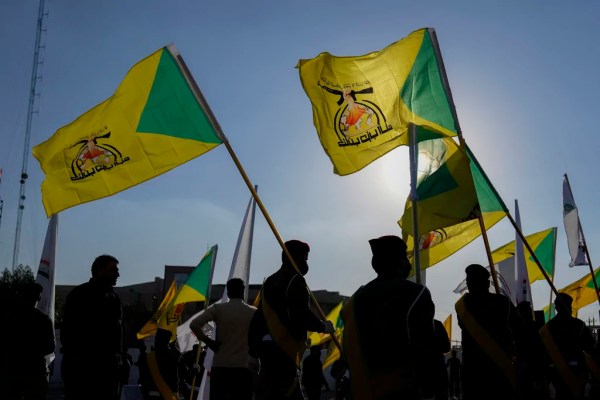
Behind this scheme is Faeq Zaidan. And through his hands, Iraq — the country sharing the longest border with Iran and the most vulnerable to its influence — is quietly being handed to Tehran on a platter, along with everything the United States sacrificed: thousands of lives, trillions of dollars, and decades of investment.
IRAQ IS BEING CAPTURED, AND WASHINGTON IS LETTING IT HAPPEN
Following the Nov. 11 parliamentary elections, where over 12 million Iraqis turned out to vote in hopes of a better life and a brighter future, months of fierce political struggle began. Incumbent Prime Minister Mohammed Shia’ al-Sudani, leader of the Reconstruction and Development Coalition and long known for his pro-U.S. stance, emerged as the clear winner. His bloc captured 46 seats — the largest share in the 329-member legislature — handing Baghdad a genuine shot at finally breaking free from Tehran’s grip. Iran, however, had other plans.
To understand how Iraq arrived at this moment, one must understand the man who engineered it. Judge Faeq Zaidan, president of the Supreme Judicial Council, has spent decades constructing a judicial architecture designed to keep Baghdad in Tehran’s orbit. This is the same man who, in January 2021, issued an arrest warrant for President Donald Trump, charging him with premeditated assassination of Iranian General Qasem Soleimani. Climbing from the Terrorism Court to the highest judicial body in the country, Zaidan secured Law No. 45 (2017), merging the presidency of the Court of Cassation with that of the Supreme Judicial Council, placing every judge and every investigation in Iraq under his personal control. It was an institutional coup: a judicial deep state planted and nurtured by Tehran at the heart of Iraqi democracy.
Article 76 of the Iraqi Constitution is unambiguous: the president must nominate the candidate of the “largest Council of Representatives bloc” to form the government. Yet Zaidan and his allies have spent years manipulating that definition to serve Tehran’s interests. The precedent was set on March 25, 2010, when the court ruled that “the largest bloc” is not necessarily the party that wins on election night, but rather any coalition assembled afterward — handing the premiership to Tehran’s proxy Nouri al Maliki over the actual election winner, Iyad Allawi. Following the 2021 elections, Zaidan’s judiciary struck again, handing the pro-Iran Coordination Framework a blocking third that paralyzed the government and forced the resignation of Muqtada al Sadr.
Since mid-2025, Zaidan has added a new front: Washington itself. Presenting himself to U.S. diplomats as a pro-Western reformer — a so-called “Iraqi strongman” capable of dismantling militias and opening Iraq to foreign investment — he successfully penetrated the State Department’s thinking while the actual pro-U.S. actor in Baghdad was quietly sidelined. On April 7, 2026, Secretary of State Marco Rubio posted on X, thanking Zaidan for his role in securing the release of kidnapped American journalist Shelly Kittleson. Many Iraqis, however, believe the kidnapping itself was orchestrated by Iranian-backed militias. The question no one at the State Department seems to be asking: why is a senior judge negotiating with militia criminals rather than prosecuting them?
U.S. Chargé d’affaires Joshua Harris and Tom Barrack, ambassador to Turkey and special envoy to Syria, allegedly informed members of the Coordination Framework that U.S. policy now supports Zaidan’s nominees — effectively turning American influence into a veto against Iraq’s legitimate winner. A single phone call to a sanctioned Iranian proxy said more about Barrack-Harris Iraq policy than any official statement.
The consequences are as damaging as they are ironic. Zaidan has delivered nothing he promised: militias remain active, Iranian influence has grown, and his hand-picked candidates now control the judiciary, the presidency, and the prime minister’s office. Barrack, a businessman with no diplomatic experience, inadvertently rolled out the red carpet for the Islamic Revolutionary Guard Corps General Esmail Qaani to step in and solve the very crisis U.S. diplomacy helped create.
AMERICA IS ABOUT TO HAND IRAQ TO IRAN AGAIN
Washington now stands on the verge of handing Iran its greatest strategic victory since 2003 — not through force of arms, but through diplomatic blindness. The Trump administration must impose a strict three-month timeline tied to tangible, verifiable objectives, including legislation that makes it impossible for militias to reconstitute under any name or form.
Without it, Zaidan will play Washington like he has played everyone else. The clock is not just running out on the U.S.-Iran ceasefire. It is running out on America’s entire position in Iraq. It is time for the Trump administration to stop being played — and start protecting its own interests.
Marc Zell is an international attorney practicing in Washington, D.C., and Jerusalem. He is the chairman of Republicans Overseas Israel, and Vice President of Republicans Overseas, Inc. Dana Levinson is a political analyst and Middle East researcher focusing on Iran, its nuclear program, regional security, and geopolitical influence.