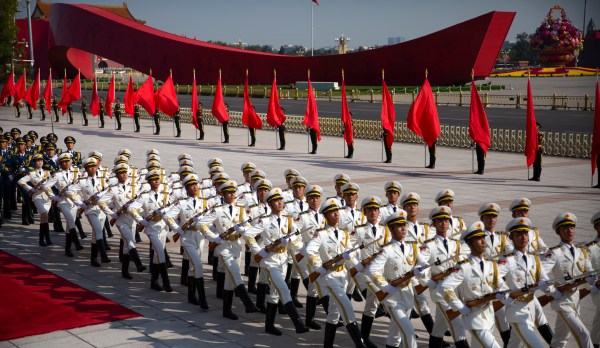
“Has China defeated our country?” chirped right-wing activist Mike Cernovich when reposting a clip of President Donald Trump speaking to Fox News’s Sean Hannity on Friday. The Make America Great Again movement, committed to confronting China, not Russia, was not impressed by the recent summit in Beijing with Chinese President Xi Jinping, whom it sees as the foreign adversary par excellence.
Yet beneath the ideological noise surrounding the summit lies a far more consequential geopolitical question: is Washington gradually normalizing China as a co-manager of global order? Strategic communication between the world’s two largest powers is necessary, particularly amid rising tensions over trade, technology, and Taiwan.
Recommended Stories
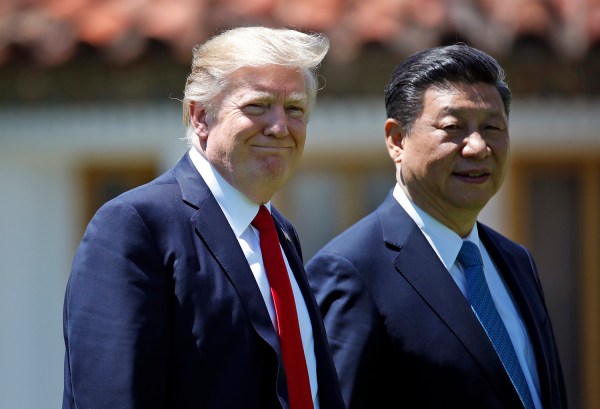
But diplomacy with Beijing should not evolve into an informal group of two arrangement that sidelines America’s democratic allies and legitimizes China’s revisionist ambitions. The challenge for the United States is therefore not whether to engage China, but how to do so without weakening the alliance structures that have long underpinned American global leadership.
TRUMP AND XI GO BIG ON THE POMP BUT LIGHT ON THE SUBSTANCE
Trump’s alliance outlook is increasingly transactional. While the White House remains skeptical of several European allies for underinvesting in defense and relying excessively on American protection, key Indo-Pacific partners such as Japan and Australia have adapted more effectively to Trump 2.0.
These countries increasingly view military preparedness not simply as national defense, but as a prerequisite for sustaining U.S. engagement in the region. In Trump’s geopolitical calculus, allies that demonstrate capability and burden-sharing are more likely to retain Washington’s long-term commitment.
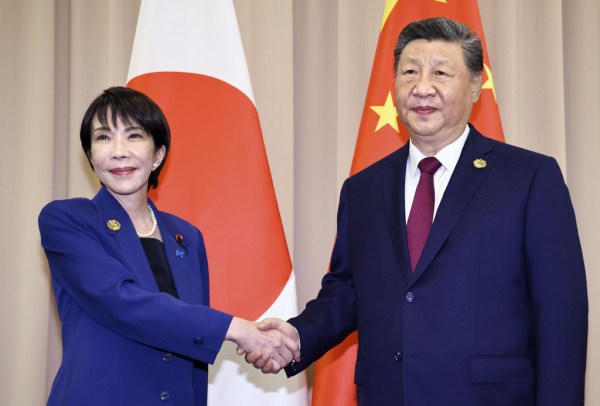
Japanese Prime Minister Sanae Takaichi stands out among G7 leaders, possessing the electoral mandate, political philosophy, and governing track record to convince the Trump administration that U.S. preeminence — and indeed global stability — is best preserved through continued American leadership of the democratic world.
In terms of philosophy, Trump reaffirmed his commitment during his March summit with Takaichi to Japan’s “Free and Open Indo-Pacific” vision, which carries a 10-year legacy of countering threats posed by China to national sovereignty, freedom of trade, and freedom of navigation.
The president is prone to view geopolitics through the lens of cost and benefit. FOIP, by urging the protection of a region through which 60% of global trade flows, very much appeals to that bias.
Regarding Takaichi’s track record, in just seven full months at the helm, she has shaken Japan from its postwar slumber in partnership with Defense Minister Shinjiro Koizumi. In fact, under her leadership, Japan has accelerated defense modernization, expanded counterstrike capabilities, and relaxed long-standing restrictions on weapons exports.
Tokyo increasingly presents itself as the model ally for a more transactional Washington — strategically capable, politically reliable, and fully aware of the risks posed by Chinese power projections. In April, Japan grabbed international headlines when Takaichi announced a major reform to rules governing the export of lethal weapons. Fighter jets, warships, and missiles are now available for purchase by Japan’s allies.
Australia, another key U.S. ally in the Indo-Pacific, was quick to sign a $7 billion deal to purchase 11 upgraded Mogami-class frigates, built by Japan’s Mitsubishi Heavy Industries. This illustrates how Indo-Pacific allies are adapting to an era of intensified strategic competition with China.
The Trump administration has strongly urged its allies to increase their contributions to their own security. Japan under Takaichi has more than answered that call. Positioned on the front line of the First Island Chain, Japan fully understands the necessity of strengthening its defense capabilities.
Europe’s major powers, Germany, France, and the United Kingdom, as well as close U.S. partners such as Taiwan and South Korea, must act with similar urgency. This will incentivize Trump to maintain a degree of multilateralism in global governance.
The U.K.’s prevarication on the Iran conflict — deciding against involvement, then shifting to limited involvement — was a case in point of how to dissolve any remaining Trumpian faith in multilateralism. European policymakers would retort that the Iran conflict has proven disastrous and that they were right not to become involved.
They would not say the same about the Indo-Pacific, however. The entire G7 grouping remains, to varying degrees, firmly committed to preventing Chinese revisionism. This reflects the reality that the Indo-Pacific has become the primary strategic theater for the U.S. If the region were to fall within the sphere of influence of hostile powers, U.S. ships and aircraft might one day have to seek permission — and potentially pay a toll — merely to transit through the region.
The future of American-led order may depend less on Washington’s ideological attachment to multilateralism than on whether its allies can demonstrate strategic relevance in an era of great-power competition.
Trump’s foreign policy instincts are transactional, but not necessarily isolationist. Allies that invest in defense, project capability, and align themselves with U.S. strategic priorities are more likely to retain American support.
RESTORING AMERICA — TRUMP CHINA VISIT IN THE REARVIEW: HIGH-STAKES BRINKMANSHIP OVER TAIWAN
The greater danger lies not in U.S.-China dialogue itself, but in the gradual normalization of a bipolar order in which democratic allies become strategically secondary.
Preventing the emergence of such a G2 framework requires allies across Europe and the Indo-Pacific to prove that American leadership remains both strategically valuable and geopolitically sustainable.
Jagannath Panda is head of the Stockholm Center for South Asian and Indo-Pacific Affairs at the Institute for Security and Development Policy in Sweden. He leads the “Silk Cage” project, which maps the rising Chinese revisionist agenda in the Indo-Pacific.