The death of kings: As a Cuban from Miami, I welcome Raul Castro’s indictment

Published May 21, 2026 12:53pm ET | Updated May 21, 2026 12:53pm ET


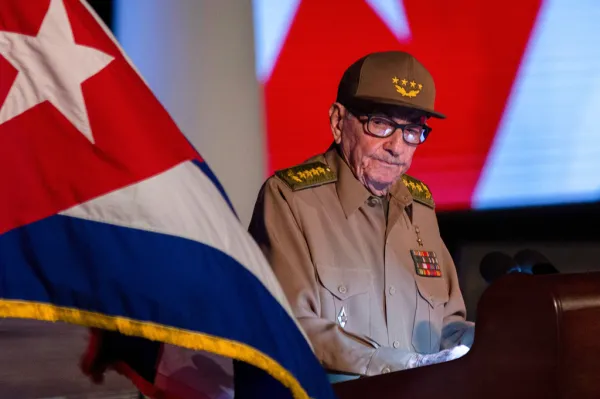
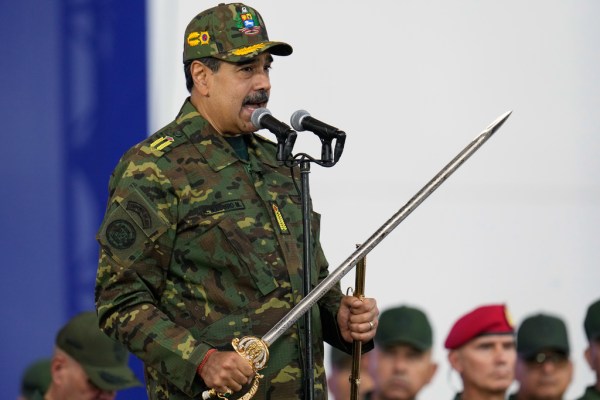
Former Venezuelan dictator Nicolas Maduro and his wife, Cilia Flores, were captured and removed from Caracas, Venezuela, in an American operation called “Absolute Resolve” on Jan. 3. The next month, Ayatollah Ali Khamenei, the brutal supreme leader of Iran, was killed during a joint U.S.-Israeli operation. And on Wednesday, the United States indicted Fidel Castro’s brother, Raul Castro, which some are seeing as the beginning of the end for Cuba’s 67-year dictatorship.

For many, the actions of the U.S. feel like too much intervention. In the words of former Vice President Kamala Harris, this administration is “dragging the United States into a war the American people don’t want.”

But for others, including myself as a Cuban American whose maternal grandfather fled three tyrannies (Francoist Spain, France as it was being occupied by the Nazis, and Communist Cuba), these are complex yet deeply hopeful moments, when the veil of tyranny is torn, allowing the light of possible freedom and democracy to shine through in places where that light had been dimmed for so long.

TRUMP SAYS ‘WE’RE FREEING UP CUBA’ FOLLOWING RAUL CASTRO INDICTMENT

I would like a chance to explain this position. Especially because my family fought so hard to give me this very opportunity — the opportunity to speak freely, in the free world.

My family, almost in its entirety, fled Cuba in waves from 1961 to the present. We are a family of refugees from a totalitarian regime that has been in power for over six decades. Several members of my family were tortured in political prisons for wanting to live freely. One was set against walls and fired at, told he would be killed, then spared, day after day, as others fell at his side, dead. This was the reality of my step-grandfather for nearly 15 years.

My granduncle was subjected to electroshocks. The list of tortures goes on from there — tortures and truths that will one day be brought to full light. Meanwhile, there is an entire group of people who already know these truths: Those who have lived them. Those who are hopeful now.

I live in Miami among those people and many who have been exiled and displaced by tyranny. Close to 8 million Venezuelans have fled Maduro and Hugo Chavez before him. Ten percent of Cuba’s population fled the island in 2022 and 2023 alone, not to mention the waves of exodus from the island since 1959: Operation Pedro Pan, the Freedom Flights, the Mariel boatlift, the Rafter Crisis. All waves of migration, whose catalysts I hope will also soon come to light.

When Maduro fell this year, the feeling in my city, home to the largest Venezuelan community in the U.S., was overwhelmingly one of relief. It’s complicated because we immediately begin asking necessary questions about the sovereignty of nations, and while national sovereignty must be respected, we must also ask about the sovereignty of the people and whether dictatorships are hiding behind a crack in this philosophy of sovereignty to protect their own unwanted reigns.

Immediately after Maduro was taken, I witnessed a divide between the Venezuelans I know and the part of my algorithm, mostly not Venezuelan, tailored around my work (I’m an artist, creator, producer, and screenwriter). Many of my friends in this algorithm seemed to discount the relief of the Venezuelan people.

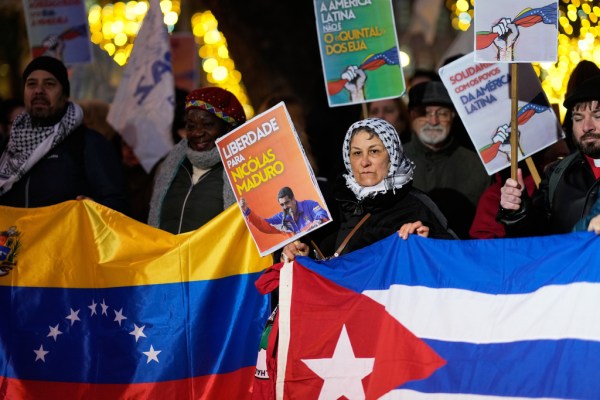
Through posts, DMs, and comments, I could tell I was not the only one facing backlash for supporting the joy of those happy to be rid of Maduro. There were people like Venezuelan journalist and speaker Mariana Atencio posting tutorials on how to disagree, in order, it seemed to me, to help Venezuelans deal with people opposing Maduro’s capture and supporting the corrupt and murderous Maduro’s regime.

For context, I am registered as an independent and have voted blue much of my life. I have always felt that artists are among the most open-minded people in the world. And I still believe that this openness is part of our superpower. But without deep understanding and research, that openness can become a vulnerable entry point that allows tyranny to infiltrate and attack a society from within.

Dictatorial regimes and their troll farms have spread anti-American propaganda on platforms such as TikTok, causing a reflexive approval of all things anti-American by those blindly repeating Chinese, Cuban, and Russian propaganda. These regimes use the freedoms of democracies against them, causing some to call dictators like Maduro and the Castros “heroes” instead of the tyrants they are. All of this allows tyranny to create a second veil. The first shields the regime from its own citizens, the second from those on the outside looking in. It’s particularly hard to tell the truth of a people when the dictatorship lording over them has monopolized the conversation — locally and globally.

What tyranny does so well is cut off the voice of its population. Maduro’s government, for instance, having learned from Castro’s regime, cut freedom of expression, attacked protestors who called out corrupt elections (most recently in 2024), conducted arbitrary detentions and unjust trials, and created torture chambers out of prisons such as El Helicoide. Economic, social, and cultural rights were betrayed. All the while, Maduro and his regime maintained total impunity for their crimes.

By intentionally cutting off the voice of the people, tyranny silences their story and inserts its own. If you are not close enough to the ground to hear the actual people, what you are listening to is the tyrant walking straight through the doors of your vulnerability.

Here in Miami, we are close to the ground. Here you can hear those calling from behind the veil. Everywhere you turn, there is a story of someone who braved the Florida Straits on inner tubes, someone whose brother was shot by a firing squad, or whose mother was ripped from them.

Stories, too, of people who have fought tyranny head-on, like Jose Daniel Ferrer. Ferrer is a Cuban opposition leader whose activism repeatedly landed him in prison unjustly. An Amnesty International prisoner of conscience, he followed in the footsteps of the late Oswaldo Paya — Cuba’s Alexei Navalny and founder of the Christian Liberation Movement — whose efforts to gather support and signatures for basic freedoms of speech, press, enterprise, association, and religion are recorded in David. E. Hoffman’s book, Give Me Liberty

The Human Rights Foundation reported evidence to suggest Payá was killed by the regime. His daughter, Rosa Maria Payá, has told me personally the horrific story of how her father was driven off the road, how they found his body, and about the gaps of information the regime created. Today, she continues her father’s fight from exile.

TRUMP SHOULD EXACT A HEAVY PRICE FOR SAVING CASTRO’S CUBA

Ferrer is now exiled, too. The government had wanted him out for a long time. He has dedicated his life to Cuba’s freedom, fought alongside Paya and others, and led people peacefully in the July 11, 2021, protests, the largest the island had seen in decades, to which the Cuban government responded by beating and imprisoning its own people rather than lose its grip.

People like Ferrer, Rosa Maria, and millions of others in the diaspora have not given up the fight for Venezuela’s and Cuba’s freedom. In exile, you lose your country, but you regain your voice.

Given the celebrations of many of the Venezuelan and Iranian people, and given that a great majority of Cuban Americans are hoping Cuba’s regime will indeed fall, I come back to these questions: Whose sovereignty are we responsible for as a global community? The people’s or the tyrant’s? What happens when people have done everything they can to shed the tyrant peacefully but cannot? What happens when the people ask for help? What is the role of the free world then?

“Freedom,” as Martin Luther King Jr. wrote in his Letter from a Birmingham Jail, “is never voluntarily given by the oppressor; it must be demanded by the oppressed.”

The Jesuit thinker Juan de Mariana, in his 16th-century book, De Rege et Regis Institutione, argued that if a monarch became tyrannical — began to take people’s rights to property, to steal from his people, to break laws, tax without consent — then the people had a right to remove that tyrant, even through tyrannicide.

When I brought Juan de Mariana up to Ferrer, he added that “other thinkers have said [what Mariana wrote], too” — Aristotle, Cicero, and even St. Thomas Aquinas, who writes against tyrannicide but believes in the ability to depose tyrants. “The end of tyranny is something that is just and right,” Ferrer says, aligning himself with the long line of philosophers before him.

“When a people,” he continues, “live with a level of oppression so large, the people have a right to revolt. The international community should come in to help if the tyrant is so excessively brutal, as is the case with Cuba, which is backed by other brutal tyrannies — Russia, China … The just thing for the international community, the free and democratic world, [is] to come to the aid, help the Cuban people.”

As for sovereignty, Ferrer has an answer for this, too. “Sovereignty? In Cuba, there is no national sovereignty, no sovereignty of the people; the only sovereignty is the tyrant. To recuperate the only sovereignty that matters, which is that of the people, you must put an end to the tyrant.” 

If you pin your ear to the ground, look beyond tyranny’s veil, you can hear what Venezuelans, Iranians, and Cubans want: their God-given right to be free.

I understand the rejection of violence; I feel it, too. The goal is peace. But, as usual, the fight against tyranny is a battle for our souls.

A world without Maduro, the Castros, and Khomeini is a better one, though first we must pass through what has been hiding behind tyranny’s veil all along. We will look horror in the face. For those who knew that horror was there all along, however, there is hope in that at least everyone can see what was once hidden.

That fallen veil, however, quickly turns into a cloak of responsibility: first to ask questions and then to act.

If tyranny releases or is forced to release its grip, can we prevent it from taking hold again? Is “never again” humanly possible? Can we better define tyranny, as an international community, to prevent us from war, even this one? Should we allow tyrannies into peacekeeping organizations, once tyranny is better defined? Does allowing totalitarian regimes a seat in the United Nations extend their veil? Or must we have better defenses if they continue to be allowed to take those seats? What is the difference between respect for sovereignty and tyrannical permissiveness? How do we stop tyranny, in other words?

Many parts of my algorithm would disagree, but I think the U.S. has done a pretty good job of fighting tyranny for 250 years in large part because it allows voices to grapple, despite that being incredibly messy. It may very well be that this moment is a part of that fight against tyranny.

CUBA IN THE CROSSHAIRS: LOOKING FOR A SOFT COUP?

As in 1969, when we first went to the moon, our perspective is both in trenches and in the skies.

From aboard the Artemis II’s voyage to the moon, Victor Glover, the spacecraft’s pilot and first black astronaut in space, reminded us all of what we are actually protecting and what we are defining right now, when on Easter Sunday he described “this oasis, this beautiful place,” and its miraculous place in the firmament. “It’s an opportunity,” he continued, “for us to remember where we are, who we are.”

Vanessa Garcia is an author, screenwriter, and producer working on a book about her grandfather’s escape from three tyrannies and what that taught her.