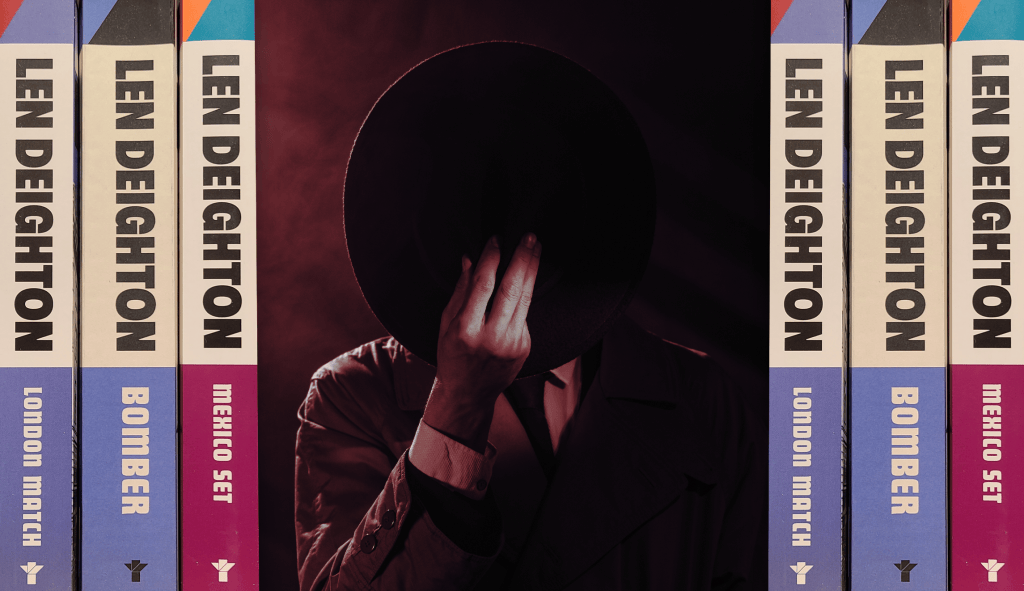
At the end of 1962, U.K. readers and audiences were introduced to two different kinds of British spy and two different depictions of the worlds they inhabit. In October, the first James Bond movie, Dr. No, hit the big screen. The following month saw the publication of Len Deighton’s debut novel, The IPCRESS File. The former was a glossy action-packed adventure in which Sean Connery’s suave yet deadly 007 went on assignment for Queen and country to Jamaica, where he enjoyed the company of beautiful women and came up against a criminal mastermind with metal hands. The latter was a grittier, more grounded affair narrated by an overweight, working-class spy who didn’t even have a name, let alone a code number, and who found himself in a torturous cat-and-mouse game involving brainwashing, a neutron bomb, and the disappearance of top biochemists. “It’s a confusing story,” he explains at the outset. “I’m in a very confusing business.”

Deighton’s book became a bestseller. Dr. No’s co-producer Harry Saltzman promptly snapped up the rights and assured Deighton that he wouldn’t make “an imitation Bond film.” He couldn’t have even if he’d tried. For with The IPCRESS File, Deighton presented the flip-side to Bond in the form of an anti-establishment anti-hero who doesn’t get the girl and save the world. His “confusing business” contains high-stakes drama, artful manipulation, and epic betrayal, like Bond’s, but it also contains moral ambiguity. In the 1965 movie, Michael Caine’s character was given the name Harry Palmer. “My name isn’t Harry,” says the protagonist in the book, “but in this business it’s hard to remember whether it ever had been.” His thick, black-framed glasses, cockney accent, cynical outlook, and preference for home cooking over fine dining consolidated Deighton’s vision of a no-frills, down-to-earth regular Joe.