

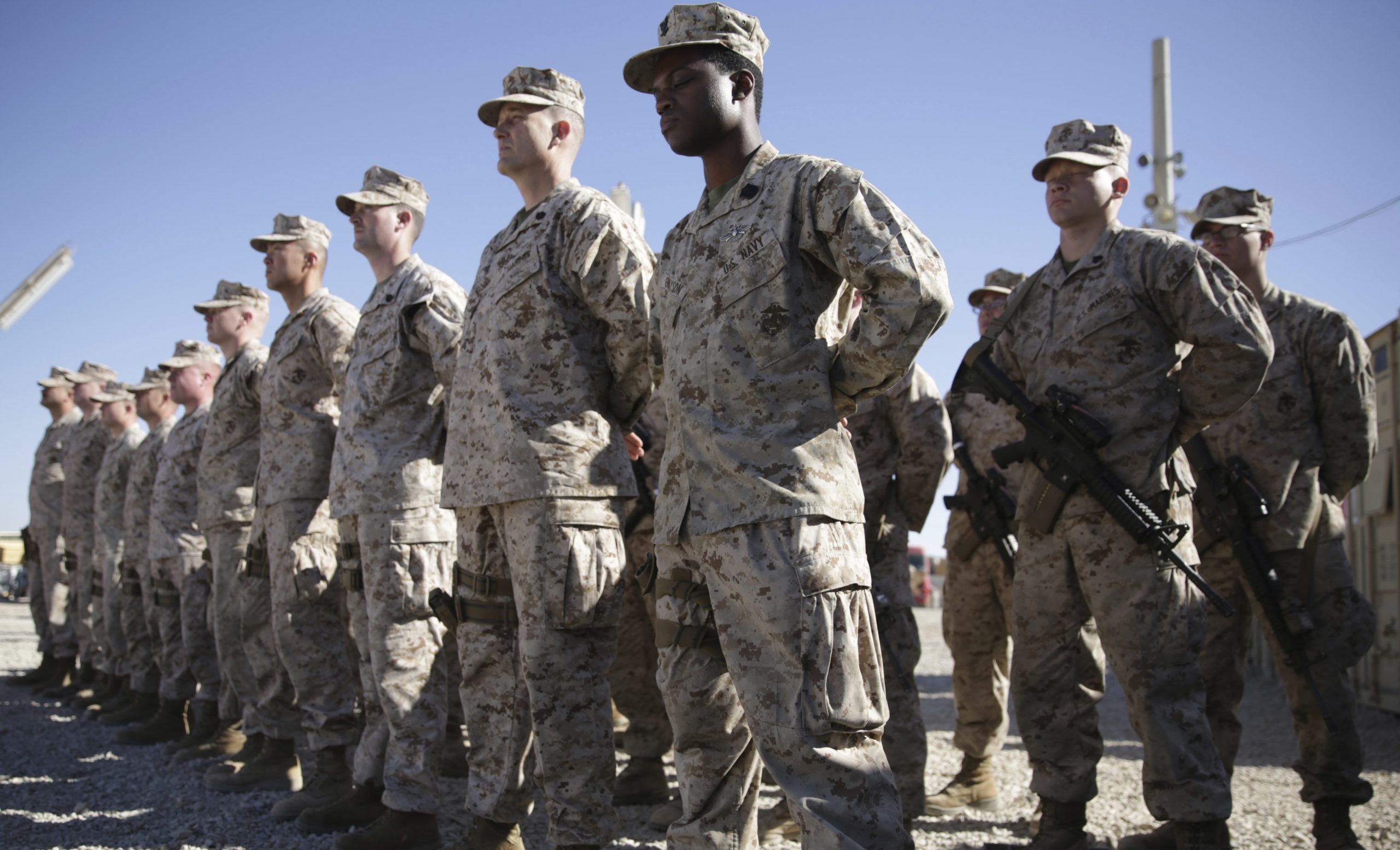
President Trump deserves credit for rejecting a total withdrawal of United States forces from Afghanistan. But he must be cautious to avoid sacrificing hard-won gains to serve a campaign narrative.
It’s a relevant point in that Trump seems unclear as to how he will approach Afghanistan following an expected near-term cease-fire agreement with the Taliban.
Recommended Stories


Speaking to Fox News Radio on Thursday, Trump pledged to reduce U.S. forces in Afghanistan from 14,000 personnel to 8,600. Trump added that some U.S. forces will remain even following any deal with the Taliban: “We’re going to keep a presence there. We’re reducing that presence very substantially, and we’re going to always have a presence. We’re going to have high intelligence.”
The problem is that reducing the presence “very substantially” is ultimately incompatible with American security. Part of the problem is that the Taliban cannot be trusted to hold to their word in any deal unless they have a gun in front of their face. As former defense intelligence official Michael Vickers recently put it, “I don’t think [Taliban] commitments mean much on the counterterrorism side.” Vickers noted the “dispersity of the threat” in terms of the various Taliban factions and allies such as the Haqqani network. This is no small concern when one adds Pakistan into the calculation.
A U.S. force structure of near 8,000 personnel will thus remain necessary to counter Taliban and other insurgent group aggression, and consolidate the Afghan government’s security capability. While Afghan security forces are improving, they lack the command, intelligence, aviation, and maneuver capabilities that America currently provides.
It’s easy to think that we could do those things with less than 8,000 people. Unfortunately, it’s not true. Take the example of helicopters. They don’t just require air crews to operate them. They require ground crews, intelligence personnel, logistics personnel, and other base personnel. The numbers add up quickly even when, as now, we are not engaged in regular ground combat. These things are necessary to ensure Afghanistan does not become a restored terrorist kingdom.
We’ve seen this movie before. As Vickers observes, “If we went strictly to the Iraq model after 2011 … I think you’d see a lot of Taliban gains. If we really cut off aid, I think you’d see a government collapse.”
The connection point between the withdrawal of U.S. forces from Iraq and the rise of the Islamic State was direct and disastrous. Only the most foolish commander-in-chief would replicate President Barack Obama’s grave error. Trump attempted to counter this concern in his Fox interview by stating that any post-deal Taliban enabled attack on America would mean “we would come back with a force like they’ve seen never before.”
But that’s a shallow argument.
Recovering territory ceded to the Taliban would be very bloody and very difficult. Why not keep a relatively small force in Afghanistan in order to preserve our future security? This is not the fight of seven years ago, with hundreds of American casualties each year. The Afghans are taking the lead with thousands of their citizens fighting and dying each year to protect their country.
EIghteen Americans have died in Afghanistan in 2019. But preventing a repeat of 3,000 dead Americans on 9/11 means their great sacrifice is worth it.
