Stop missing the point.
The real concern with President Trump’s tariffs on China isn’t their impact on household bills; it’s about America’s future. If China is not restrained in its ambitions, a restraint that tariffs currently play a crucial role in, America’s future will be one of far less prosperity and far fewer freedoms.
Recommended Stories
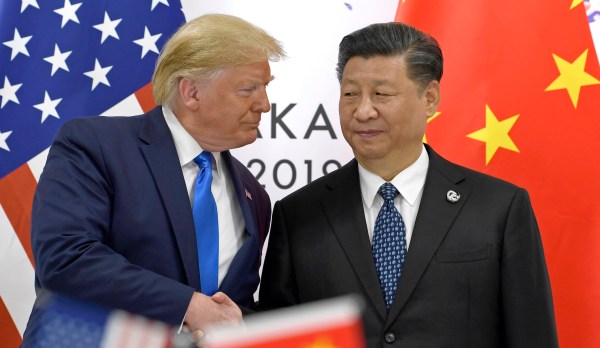
I note this in light of the emerging centrist consensus that Trump’s tariffs are highly misguided. Mark Perry of the conservative American Enterprise Institute recently described the tariffs as products of an “insane” trade war with China. Perry also noted New York Federal Reserve findings that the tariffs will cost American households an average $831 per year.
Obviously, that $831 is far from ideal. But fixating on that cost misses the big issue.
These tariffs are a necessary hardship in service of a better American future. They are designed to corral China into a limited trade agreement that would provide improved American export access to the Chinese economy and reduce Chinese manipulation of global trade.
Those are two exigent concerns for the United States and the international community. After all, China’s use of vast state subsidies, its rampant breach of WTO rules, and its destruction of fair competition are grotesquely unfair to American exporters. But seeing as China’s economy is less stable than Chinese President Xi Jinping pretends, Trump’s escalating tariffs put extreme pressure on Beijing to entertain a serious trade deal with the U.S.
Still, it would be a mistake to view these tariffs simply as a means to a trade deal. Ultimately, this is about far more than that. It’s about preserving the U.S.-led international order in the 21st century. Is it worth it?
Yes, it is. America’s international order has given global consumers, including Americans, great access to cheap goods, great opportunity for innovation and export prosperity, and the emerging power of middle classes which gravitate towards democracy and the rule of law. It is why we are wealthy, living longer, and living with fewer wars. But China wants to replace that order with a feudal mercantilism.
Be under no illusions: China’s order would reflect the morality of its Communist Party, a morality of state domination of individual freedom, mass repression, and authoritarian centralization of power. It would mean China’s right to the intellectual property of any nation, its veto over which nations other nations trade with, and its demand that Chinese exporters be prioritized over all others. It would thus make China far richer and everyone else a serf.
Countering this agenda is an exigent concern of U.S. national security and the better future of the public. Temporarily, until China agrees to a trade deal (which Xi must eventually agree to due to his economic weaknesses), tariffs form a necessary part of U.S. strategy. But Trump is also rightly deterring Chinese imperialism in the West Pacific, corralling Chinese espionage, attacking Chinese intellectual property theft, and seeking to overmatch Chinese military capabilities.
Those who complain about $831 are missing the big point. Yes, Trump is wrong to say that China is paying for the tariffs. But if those Americans who oppose these tariffs have their way, the lost opportunity of the American future will eventually be measured in hundreds of thousands of dollars, not hundreds.