The future — and past — of black America

By
Published October 26, 2015 4:01am ET


The occasion of the third Million Man March on October 10, 2015, on the 20th anniversary of the first march, offers a vantage point and opportunity to reflect on changes in African American life over the years. I was present at all three events and active in securing congressional approval for the location of the last two marches. The differences in attendance at this march were obvious, men and women, families, old and young, gay and straight, a new diversity of race and religion, and a new sense of the power of unity and determination. A renewed sense of energy and confidence.

I have to admit that deep in my heart there is an urge in an op-ed like this to let go with a few hundred words of rant expressing my frustration, impatience and bitterness over the slow progress, sometimes backsliding, our community has experienced over my more than five decades of activism and some 35 years as an elected official. But the truth is that my feelings are not the issue, and rants are not as effective in building a movement for change as laying out the truth, and building that movement is what I am about.

Related Story: http://www.washingtonexaminer.com/article/2574118/

The history of the African American community is one of enduring, relentless struggle with a vision of accepting nothing less than full social and economic equality. Yes, there have been some significant victories for our community, breakthroughs on the electoral front most prominently. But for the great mass of African Americans, economic and social justice has yet to be realized.

Folks are still debating the size of the first Million Man March, but whatever the exact count was it was certainly the largest civil rights march in U.S. history. Like every great civil rights march the demand for economic justice was a key element. What was the economic situation in the decades leading up to the first march? I will use figures for Chicago throughout this commentary with the understanding that each sector of the country had its own unique story, but that there was a general bleak pattern everywhere.

The difference between the weekly wages for Black and White men had been declining slightly between 1970 and the first march (from about 75 percent to 74 percent). This was more than offset by the sharp decline in labor force participation of Black men. While the commonly quoted unemployment rate of Black men in Chicago was reported to have dropped from 13 percent to 9 percent, the portion of Black men not in the labor force, men who had not been able to find a job for so long they had given up, had risen from 8 percent to a staggering 22 percent. The number of Black men who had manufacturing jobs in Chicago dropped from 37 percent to 23 percent. Much of this was due in large measure to de-industrialization (basically shipping manufacturing jobs overseas).

On the question of social justice in the years leading up to the first Million Man March, it is hard to quantify the number of police shooting of Blacks because good statistics do not exist. But we do have the experience of police torture of Black men in custody in Chicago during those years.

In October 2008, Jon Burge was indicted by a federal grand jury in Chicago for lying about whether he tortured African-American suspects with electric shock, suffocation and other medieval techniques from 1972 to 1991. The indictment followed a $20 million settlement that was approved, in January 2008, by the Chicago City Council and awarded to four African American men who were tortured into giving false confessions and spent decades on death row for crimes they did not commit.

In September 2013, the city settled two more torture cases brought on behalf of exonerated torture survivors for a total of $12.3 million. One of the survivors, Ronald Kitchen, had spent 13 of his 21 imprisoned years on death row. Finally this year a $5.5 million settlement was created to provide for financial compensation to the living survivors; non-financial reparations for living survivors and for the immediate families of all survivors, living and deceased, that included psychological counseling at a South Side center, job training and free education at the City Colleges; an official apology; required teaching of the torture scandal in the Chicago public schools; and a public memorial.

That was the background of the first Million Man March. What about the background for the 20th anniversary march? Well, following the shocks and setbacks of the Great Recession there was no recovery in the African American community. Here are the facts: at 9.2 percent, the current unemployment rate for Black Americans is more than double the 4.4 percent for White Americans. The African American unemployment rate today is the same as the highest unemployment rate experienced by White Americans during the recent recession.

The median income of African American households is $35,400, nearly $25,000 less than the median income of White households ($60,300). The median net worth of White households is 13 times greater than Black households ($142,000 vs. $11,000). More than one in four African Americans live in poverty (26.2 percent) almost triple the rate for Whites (10.1 percent).

One in every 13 African-Americans of voting age is disenfranchised because of a felony conviction — a rate more than four times greater than the rest of the U.S. population. African-Americans now constitute nearly 1 million of the total 2.2 million prison/jail population and are incarcerated nearly six times as often as White people. Black males aged 15 to 19 were 21 times more likely to be killed by police than White males in that age group. Unarmed Black men were seven times more likely to be killed by police this year than unarmed White men.

What are we to conclude from these dismal numbers? I believe that the changes in this most recent march, the inclusion of women and families, the increased diversity of the march, the gains in political power now set the stage and offer the opportunity to move to addressing not just formal, legal barriers to economic and social justice, but to addressing institutional, systemic barriers.

These barriers will be no less difficult to dismantle than those which existed in post WWII America and were dismantled by the Civil Rights Movement of the 1960s. But their throttling grip on Black life in our nation is no less real and no less suffocating. Looking out over the vast crowd on October 10th, I saw the future of our community, a new generation along side a veteran generation, men and women, gay and straight, ready to revitalize American democracy in a fundamentally new way.

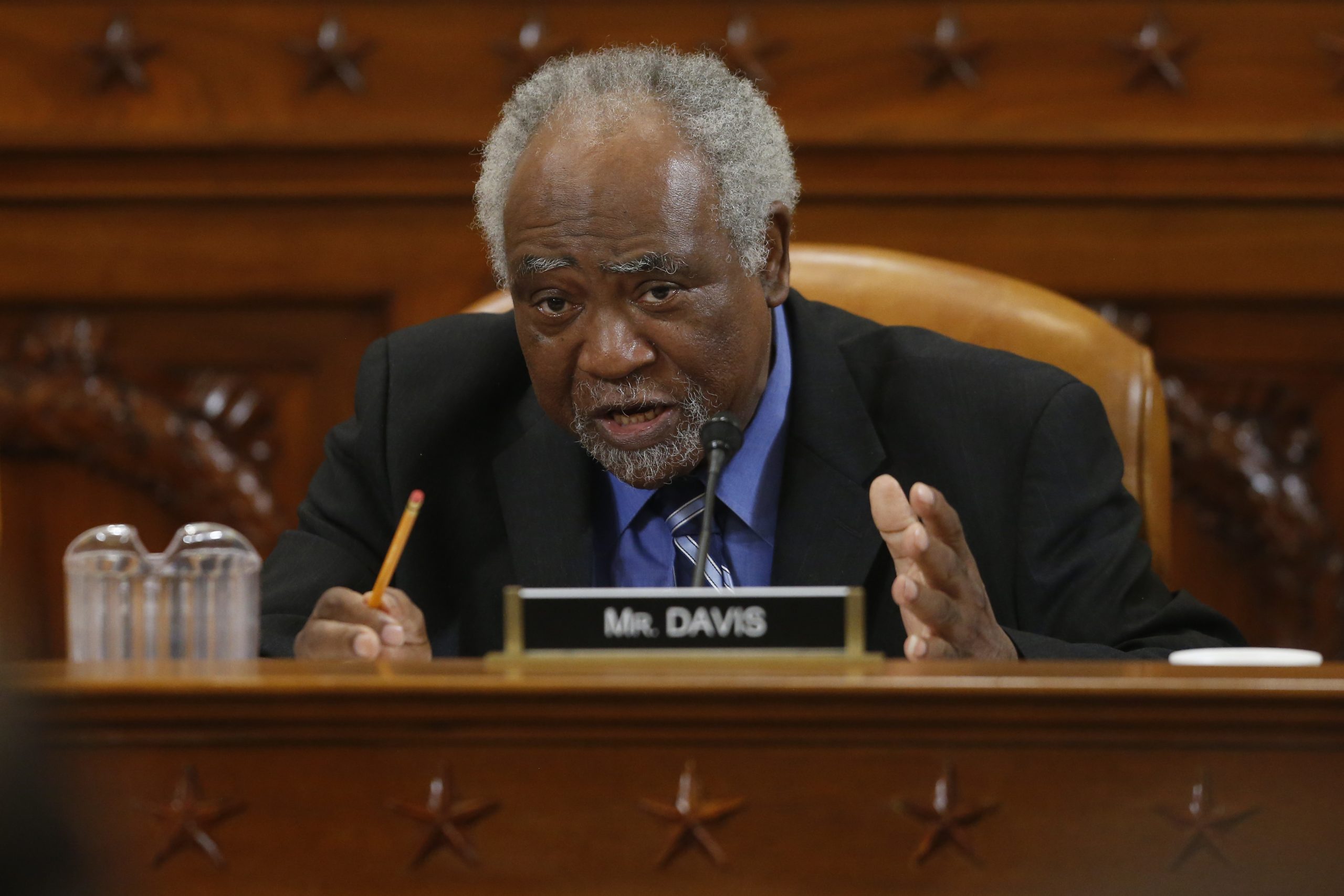
Danny Davis is the U.S. Representative for Illinois’s 7th congressional district. Thinking of submitting an op-ed to the Washington Examiner? Be sure to read our guidelines on submissions.
