

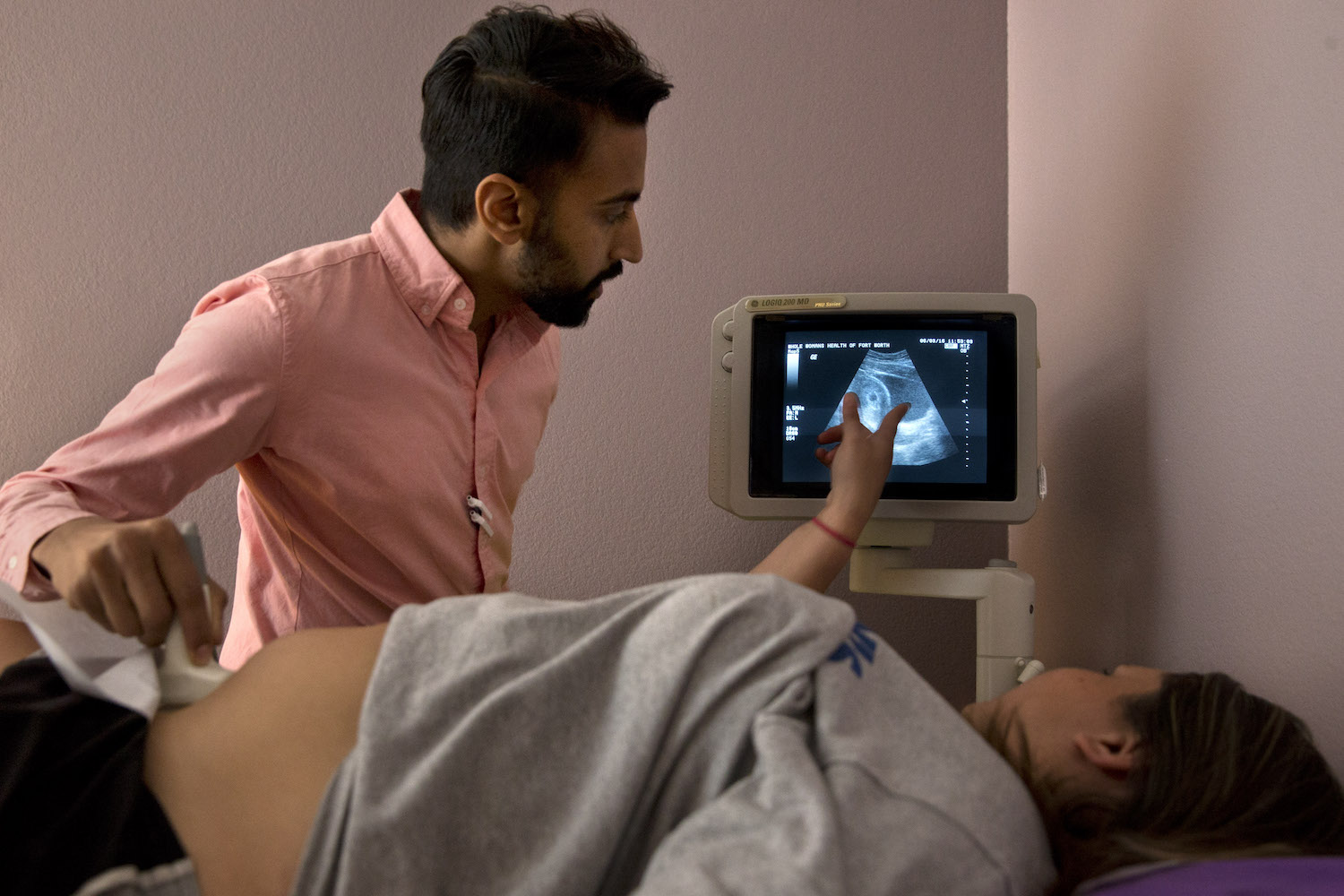
A woman’s attempt this week to dehumanize the unborn has gone poorly for both her and the newsroom that published her report.
Moira Weigel, who is currently pursuing a doctorate in comparative literature at Yale University, argued this week in the Atlantic that, “the origins of fetal ultrasound lie in stealth warfare.”
Recommended Stories


If that’s not enough give you an idea as to the overall tone of the article, which naturally generated a great deal of criticism, consider its original and not-at-all subtle headline: “How the Ultrasound Pushed the Idea that a Fetus Is a Person.”
Oh boy.
The Atlantic quickly changed that title to the somewhat-less-obvious, “How Ultrasound Became Political.” The report’s subhead now coyly reads, “The technology has been used to create sped-up videos that falsely depict a response to stimulus.”
But headline changes are the least of Weigel’s problems. The story itself is riddled with several factual errors, according to the Atlantic’s editorial team.
As of Friday morning, this is the running tally of everything Weigel got wrong in her story challenging the personhood of the unborn, as identified by the Atlantic:
• This article originally stated that there is “no heart to speak of” in a six-week-old fetus. By that point in a pregnancy, a heart has already begun to form. We regret the error.
•• This article originally stated that the fetus was already suffering from a genetic disorder. We regret the error.
••• This article originally stated that Bernard Nathanson headed the National Right-to-Life Committee and became a born-again Christian. Nathanson was active in but did not head the committee, and he converted to Roman Catholicism after The Silent Scream was produced. We regret the error.
•••• This article originally stated that the doctors claimed fetuses had no reflexive responses to medical instruments at 12 weeks. We regret the error.
At this point, it may be faster to list all the things Weigel got correct in her story.
Good on the Atlantic for catching the errors and correcting them in a professional manner. Shame on them for publishing this wreck of a piece in the first place.
(h/t Denny Burk)
