Spanish amnesty and its patron saints

Published July 13, 2026 4:53pm ET | Updated July 13, 2026 4:53pm ET


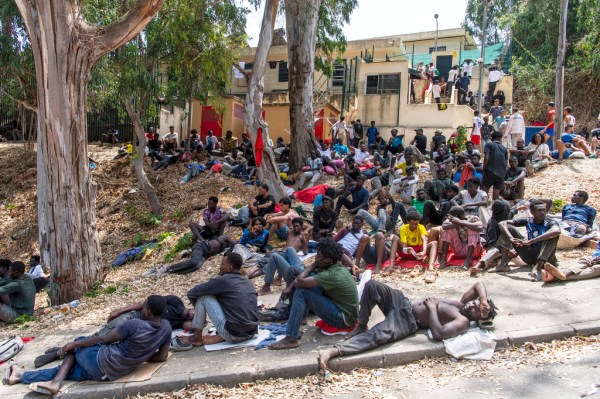
Spain’s socialist government has, in defiance of the Council of State’s objections, the will of its people, and any modicum of better judgment, proceeded with its plan to grant amnesty to what may be as many as 1.2 million migrants. Amid the clamoring over the supposed “demise of Spain,” it’s worth seeing if we cannot excavate the rubble for lessons: What went wrong and what might set things right?

Spain’s Proceso de Regularización Extraordinaria was indeed “extraordinaria” from its inception. Its terms were deplorably lenient: Five months and a clean record earned any undocumented migrant a renewable work permit — never mind formalities like having a job lined up for said “work permit” or any employment history. For the great majority of applicants, it also puts full citizenship within reach after as little as two years of legal residence. 
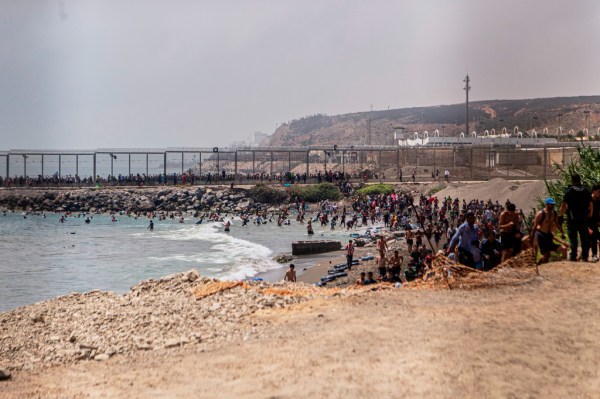
In total, the initiative is on track to dwarf what was previously the second-largest regularization in modern European history, Italy’s 2002 amnesty of some 647,000. Conservatives may be vexed to learn that the only Western migrant amnesty ever bigger was President Ronald Reagan’s, in 1986, at 2.7 million.

Spain’s foreign-born population is now over 1 in 5 residents, in a labor market where foreign-born workers received 85% of the jobs created in 2024. One needn’t pretend countries and economies are zero-sum competitions, much less take issue with all immigration, to find this state of affairs objectionable.

The Russians, connoisseurs of national self-sabotage, distilled all such episodes into one eternal question: Who is to blame? It is difficult to know where to even begin in Spain’s case.

There is, firstly, the sheer incompetence and deceit of the state. Madrid forecast and advertised 500,000 applicants for this program — it, of course, received 1.2 million. How could it possibly misjudge such a critical population figure by more than double? Well, they didn’t, exactly: An internal National Police report, weeks after the announcement, accurately projected these 1.25 million applications. The government never published it, though, and has since designated all technical and police reporting on the process “classified.” Police specialists separately estimated that only 850,000 undocumented migrants actually resided in Spain before the cutoff date — which means that hundreds of thousands of applicants arrived afterward or outright manufactured their eligibility. 

Americans may be wondering: Why would the Spanish ever agree to this? The answer is not, in fact, that they are “spineless Europeans,” but more cynical: They never agreed. Prime Minister Pedro Sanchez’s socialists lead a minority coalition too weak to pass ordinary legislation. So instead, the measure was enacted via “royal decree,” which, as the name suggests, requires zero votes and only a non-binding opinion from the government’s legal review body — who objected, mind you. In the end, over two-thirds of Spaniards opposed the measure. 

Most notably, an incredible 80% of Spaniards aged 17 to 25 opposed it, and 66% of the general public rejected the measure’s stated justification: Pensions. Sánchez dismissed this as “xenophobia”; the pensioners’ republic steamed forward, the youth left in its wake.

Ultimately, though, the policy found its most fervent support not in retirement homes but in the Church. An ecclesial coalition, led by Caritas, the bishops’ charitable arm, and including the Spanish Episcopal Conference’s Migrations Department and the REDES network of Catholic NGOs, had campaigned for mass regularization since 2021. At least 84 Catholic organizations backed the initiative, and parishes helped collect the roughly 700,000 signatures that placed the policy before Congress. When the initiative inevitably stalled there, the coalition escalated: Caritas testified before Congress on its behalf, and the group, by its own account, held a multitude of “meetings with various political and social actors to reach an agreement.”

A glowing profile of the movement credits its “sustained bridging work” via the alliance between “anti-racist, antifascist, feminist collectives” and “Catholic faith-based organizations.” Some very impressive collaboration, indeed.

The president of the Spanish Episcopal Conference, Luis Argüello — the coalition’s most senior patron — managed, in a 2024 interview, to sound simultaneously like Renaud Camus and an open-borders activist: “The first right of migrants is to be in their own homes, and we are aware that a global phenomenon of replacement and substitution is occurring due to the lack of hope for life in our societies [referring to low fertility rates in Spain]. That said, the Church welcomes those who come, affirming fraternity.”

Despite this compelling offer from Archbishop Arguello, parliament was still not sold — recall that nearly 70% of the population opposed the policy — so the coalition once again changed course. (One can only dream of what could be achieved if this ingenuity were directed elsewhere.) This time, it successfully “exhorted,” to use its own words, the government to proceed via the aforementioned royal decree.

And so, a spirited Leo XIV soon became the first pope to address the Spanish Congress, where he dropped by to remind them that migration is “an eminently moral question” beyond “any purely demographic or economic reading” and required precisely this dissolution of “national priority.”

Not only had the measure passed, but the various caveats the coalition had carved out were also overwhelmingly met. In their meetings, these ecclesial entities repeatedly invoked migrants who, though present in the country, had somehow been separated from their papers, and demanded “a solution for those who cannot access the ordinary channels.” The government obliged them almost word-for-word. Per the decree’s official guidance, the requisite five months’ presence could be established by any dated paper bearing a name; I am not exaggerating when I say that transport tickets and metro pass receipts were explicitly listed as qualifying! 

Unsurprisingly, police reported a curious epidemic of “lost” passports in the weeks after the announcement — up 866% for Pakistani nationals — from applicants whose documents might otherwise have betrayed a late arrival or criminal record. 

Even then, the Church’s role continued to expand. The decree largely sidelined the police, handing verification to ministry clerks and NGOs on the government’s register of “collaborating entities” — and this is how Caritas was empowered to file applications on migrants’ behalf and to stamp the “vulnerability certificates” by which applicants with no job and no family in Spain could qualify. Parish spaces were used to provide assistance, and diocesan Caritas branches provided “direct financial aid to facilitate obtaining the necessary documentation for regularization.”

Police warned that “there will be more fraud.” And the result was indeed, by some accounts, fraud by 400,000 people — or, as this coalition prefers we call it, “a measure of political, ethical and social responsibility.”

Still, pretending that any of this amounts to the “death of Spain” would be perfectly ridiculous. These eulogies are gross exaggerations that make a mockery of the actual problem — and worse, usually amount to political abdication. Perhaps most importantly, though, there are no such things as Spanish migration problems anyway; these are, by design, European problems. 

The EU’s Schengen agreement has abolished internal border checks across 29 countries and 450 million people. Spain’s new permit-holders can freely make their way from Algeciras all the way to Helsinki if they so please — though I suspect they won’t. More likely, many will settle in Western Europe, in countries that are just now beginning to grapple with immigration. 

THE DEMOGRAPHIC MATH OF BIRTHRIGHT CITIZENSHIP

Spain, for its part, has performed seven regularizations in 40 years. It is an almost comical paradigm: Even as ascending governments are starting to fight to secure borders in various European countries, Spain, every few years, mints future Europeans by the million. 

It has demonstrated, for the seventh time since 1986, that there is no meaningful immigration control mechanism built into the European system. There is only an ungoverned commons, an ever-growing queue of gerontocratic states with reasons to plunder it, and an endless supply of holy justifications for doing so.