President Donald Trump is known for forging his own foreign policy path, and Gaza is no different. Whereas the previous administration hoped that a “revitalized” Palestinian Authority would take over the Strip, the Trump administration pumped the brakes. A U.S. State Department report published last week vindicates that decision.
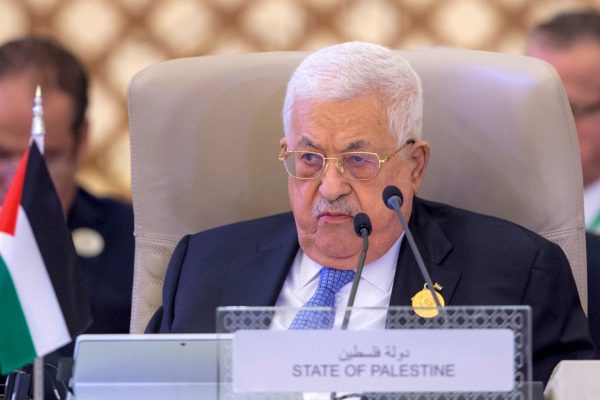
Under U.S. law, Washington withholds certain assistance from Ramallah if the State Department is unable to certify that the PA has “terminated payments for acts of terrorism.” Ramallah has long provided monthly salaries and other benefits to Palestinians currently or previously imprisoned in Israel for “participating in the struggle against the occupation.” Families of prisoners or terrorists killed in the act are also eligible for welfare. This program is colloquially known as “pay-to-slay.” PA President Mahmoud Abbas declared an end to the program in February 2025, but evidently, it hasn’t stopped.

Recommended Stories
The State Department took the atypical step last week of publicizing its report to Congress, which covers September 2025 to February 2026. The content is disconcerting, if not predictable. According to the department, the PA “provided $156 million in payments and benefits to Palestinian terrorists and their families” in 2025. PA Finance Minister Estephan Salameh affirmed in February 2026 that Ramallah continues to provide a “[60%] rate of [PA public employee] salaries” and has not “abandoned any Palestinian resident, whether they are prisoners or families of Martyrs and wounded.”
Dozens of jailed terrorists released in exchange for Israeli hostages are slated to receive monthly payments in excess of $1,000. Ramallah has set the minimum monthly wage at roughly $500, which means that violence is often a lucrative business.
Pay-for-slay is a major reason why the Israeli government has long said that it does not want the PA to enter postwar Gaza. Compounding the challenge is the fact that the PA has long been mired in corruption and mismanagement, epitomized by the 90-year-old Abbas who is currently serving his 21st year of a four-year presidential term.
Municipal elections held on April 25 in the West Bank and Deir el-Balah, Gaza — the first elections of any kind in the Strip since 2006 — compound the picture. Fatah, the PA’s dominant faction, ran uncontested in several races and a recent decree requiring candidates to endorse the Palestinian Liberation Organization’s “program,” which formally renounces violence and recognizes the State of Israel, boxed Hamas and other terrorist groups out of the race.
In Gaza, where the PA has had no presence since 2007, Fatah-backed candidates won six out of 15 seats on Deir el-Balah’s municipal council, although voter turnout there was below 25%. Moreover, Hamas forces reportedly secured Gaza’s polling stations, demonstrating that the terrorist group remains armed and in charge.
Nevertheless, Fatah declared a “sweeping victory” when the returns came in.
The only motion these results should stir in Washington is doubling down on Trump’s 20-point plan for Gaza, which excludes the PA and instead calls for a “technocratic, apolitical Palestinian committee” to oversee Gaza until “the Palestinian Authority has completed its reform program.” Washington launched the so-called National Committee for the Administration of Gaza in January as part of the second phase of the Gaza ceasefire.
The presence of armed Hamas guards at polling stations in Gaza also points to the continued challenge of disarming Hamas. Without disarmament, all progress toward the goals of the 20-point plan remains “in question,” Secretary of State Marco Rubio explained on April 27. No committee can govern in a technocratic or apolitical manner if it has no forces of its own and a terrorist organization rules the streets.
Thus, Washington must hold firm on Hamas disarmament while resisting any pressure to prematurely welcome the PA into Gaza. Moving to bring the PA back into the fold would reward a faction that the State Department made abundantly clear has yet to earn it. Instead, the Trump administration should continue to empower the NCAG while pressing the PA to pursue meaningful reform.
The 20-point plan has made “substantial progress,” according to former U.K. Prime Minister Tony Blair, who sits on the executive board of the Gaza Board of Peace. Now is no time for the Trump administration to back down. On the contrary, the administration should turn up the pressure on Hamas to disarm. For, as Blair noted, only if Hamas surrenders its weapons will the policies that have “made daily life for Gaza people so difficult” start to reverse.
Natalie Ecanow is a senior research analyst at the Foundation for Defense of Democracies. Follow Natalie on X @NatalieEcanow. Follow FDD on X @FDD. FDD is a Washington, D.C.-based, nonpartisan research institute focusing on foreign policy and national security.