

The Strait of Hormuz has been effectively closed for two months.
Not in theory. Not as a possibility. But in reality.
Recommended Stories


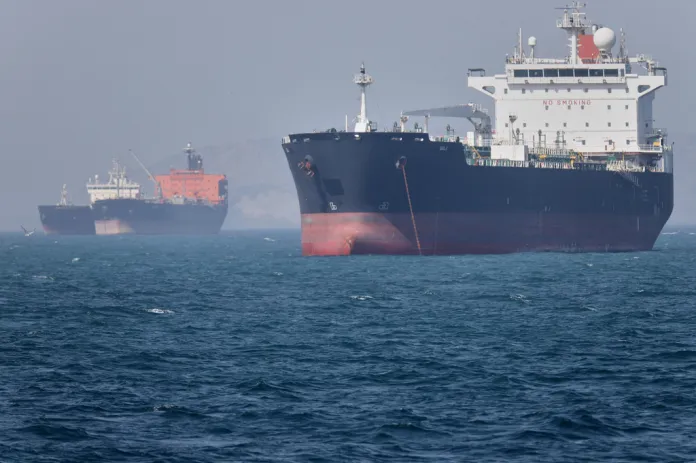
The threat of attack from Iran has paralyzed shipping through this vital artery of global trade. Insurers have pulled back — some refusing coverage altogether, others imposing terms so extreme that passage is no longer viable.
Tankers sit idle or turn away. Energy prices are surging. Supply chains are tightening. Critical shipments, from fuel to fertilizer, are delayed or halted entirely.
This is what it looks like when a key choke point in the world economy is seized and controlled by a terrorist regime.
Iran has not just threatened the strait; it has acted. Ships have been attacked. The regime claims to have laid mines, though none have been confirmed — at least not publicly. Commercial vessels have been warned to comply with the demands of the Islamic Revolutionary Guard Corps or face consequences.
The result is unmistakable: One of the most important waterways on Earth, through which roughly one-fifth of the world’s energy typically flows, has been reduced to a zone of risk and coercion.
For decades, the free passage of global trade through key maritime routes was treated as a given. Not because the world was peaceful, but because there were limits — lines that, once crossed, would trigger a response strong enough to restore them.
That assumption is now being tested. The United States has acted. A naval effort is underway to reopen safe passage, guiding stranded ships and attempting to break the chokehold that has paralyzed the strait.
But this is not, and cannot be, an American problem alone.
Because what’s at stake is not just access to a single waterway. It is the principle that global trade cannot be dictated by force.
If that principle collapses here, it will not hold anywhere.
From the Red Sea to the Indo-Pacific, the modern economy depends on narrow corridors like this one. If the Strait of Hormuz can effectively be closed by a rogue nation — and the world hesitates, fragments, or looks away — then every choke point becomes a potential weapon. Every supply chain becomes contingent. Every market becomes more volatile.
And every adversary takes note.
The economic consequences are already spreading. Energy costs are rising. Shipping companies are pulling back. Businesses are bracing for higher input costs and delayed deliveries. What began as a regional crisis quickly became a global one because the modern economy is not designed to function with its arteries constricted.
There is no opting out of this. There is only the question of response.
Critics, including the United Kingdom, Germany, France, Spain, and even Italy, nations that depend on free navigation through the strait far more than the U.S., claim they did not start this war and are not required to act.
They warn that any effort to reopen the strait carries risk and they refuse to bear it. At the same time, our NATO allies and much of the Democratic Party appear driven by a determination to deny President Donald Trump a victory, even in the face of a global crisis. Their appeasement of the world’s largest sponsor of terrorism only emboldens them.
They are correct that the potential for escalation is real. But the cost of inaction is far greater.
Inaction is not neutral. It is a decision to allow coercion to stand. To allow precedent to form. To signal that control of global trade routes can be seized and maintained. That is not stability. It is surrender.
Reopening the strait is not about aggression. It is about restoration — restoring the basic condition that international waters remain open, that commerce is not subject to the whims of a theocratic regime, and that the rules underpinning global trade still mean something.
Restoration requires more than statements. It requires alignment.
The U.S. is already moving to reopen the strait. It is assuming the risk, the responsibility, and the burden of action. The question now is whether the rest of the world, especially those who depend heavily on the flow of energy and goods through the strait, will stand behind that effort.
Or stand aside.
TRUMP’S CHURCHILLIAN FOREIGN POLICY
Neutrality, in a moment like this, is not neutrality at all. It is acquiescence.
And that brings the world to a point of clarity it can no longer avoid: Either the world rejects Iran’s control of global trade, or it accepts that control as the new normal.
