

The White House is moving to fast-track nuclear power development in space, laying out a detailed road map with firm agency roles and time frames to put reactors on the moon and in orbit within the next decade.
The new guidelines build on President Donald Trump’s executive order to ensure space superiority, which set a goal of deploying space-based nuclear reactors by 2030.
Recommended Stories
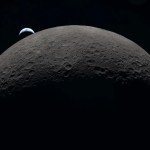


The push builds on an announcement in August 2025 that NASA would develop a lunar reactor as part of an effort to compete with China and Russia in an intensifying space race, with the new guidelines bringing this goal closer to reality.
The directive establishes the National Initiative for American Space Nuclear Power, a coordinated effort led by the White House Office of Science and Technology Policy.
“Nuclear power will make sustained human presence in space possible,” OSTP Director Michael Kratsios said on social media. “We will survive the lunar might, endure Martian sandstorms, and venture into the stars.”
Unlike earlier high-level proposals, the new memorandum assigns concrete responsibilities and deadlines to federal agencies, signaling a shift from concept to execution.
The center of the plan is a dual-track development strategy. The Trump administration is directing both NASA and the War Department to run parallel design competitions for low- to mid-level power reactors so the high-powered reactors will be prepared to deploy by 2030.
“The United States will lead the world in developing and deploying space nuclear power for exploration, commerce, and defense,” the memorandum reads, adding that agencies will partner with private-sector innovators to help meet the objectives.
“We want launching from the United States on U.S. rockets, buying U.S. in-space logistics, and landing on U.S. re-entry ranges, to be easy and routine,” Kratsios said Tuesday.
Near-term objectives include safely deploying nuclear reactors in orbit as early as 2028 and on the moon as early as 2030.
Officials cast the plan as both urgent and intentional.
“Americans are both dreamers and a people of action,” Kratsios said, tying the initiative to earlier space milestones. “There is nothing natural or inevitable about the quest for space. … America chose to be a space superpower.”
JOHNSON BACKS EXPELLING SHELIA CHERFILUS-MCCORMICK FROM HOUSE
The guidance underscores that nuclear power is key to sustaining long-term missions, providing the sustained electricity, heating, and propulsion needed for a permanent presence beyond Earth.
“This initiative … creates the road map” to deploy reactors on the moon and in orbit, Kratsios said. “America’s military superiority will not be questioned in land, sea, air, or space — the ultimate high ground.”
