
I believe it was the critic Dwight Macdonald who first pointed out the prevalence of “how-to-ism” in American literature. It isn’t just that there are lots of practical manuals for cooking or gardening, succeeding in business or love, but that the instructional mindset permeates even the most celebrated novels. If you’ve read Herman Melville’s Moby Dick, you’ll know enough about the sea to board a whaler yourself. And Henry James spent a good deal of his time telling young Americans how to comport themselves in European society. The instructional tendency is perhaps especially strong in Ernest Hemingway. Much of his writing consists of tips for how to booze or kill bulls or go to bed with women. All worth knowing, to a greater or lesser degree.
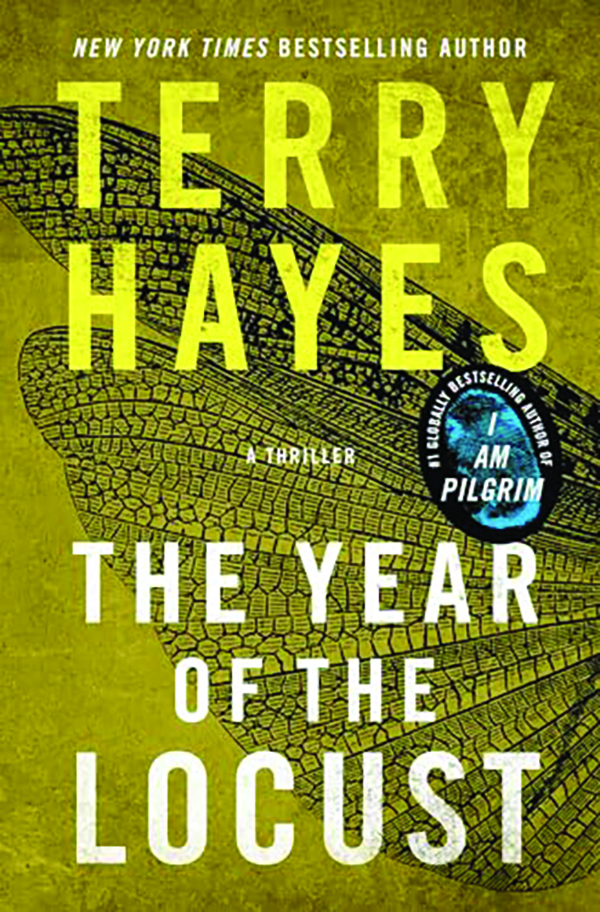
Didacticism needn’t be obnoxious, but of course it often is, in particular on literature’s lower slopes. I’ve just slogged through one of the most egregious examples I’ve ever encountered: The Year of the Locust by Terry Hayes. Hayes is the British-born Australian Hollywood screenwriter whose spy thriller I Am Pilgrim scaled the bestseller charts 10 years ago. It followed an American intelligence officer tasked with preventing a Saudi terrorist known as “the Saracen” from unleashing a terrifying bioweapon on the West. The new novel — eagerly awaited and an instant bestseller that has very likely been purchased an order of magnitude more times than your favorite book, unless your favorite book is Harry Potter or The Da Vinci Code — has essentially the same setup. It features Denied Access Area Agent Kane, who’s trained to infiltrate hostile no-go countries.
Recommended Stories
He seems rather proud of that fact, mentioning it, by my count, some 20 times. Kane is the sort of man who “counts himself lucky” if he returns from a mission with “nothing more than a slashed calf and a round from a machine pistol” in his shoulder. And it is the CIA’s good fortune to have people like Kane because, as Kane keeps saying, only someone with his “experience and unusual skills” could hope to catch Abu Muslim al Tundra, the military leader of an ISIS offshoot called the “Army of the Pure,” before Tundra releases poison gas over large parts of the United States. For Hayes to have picked a Muslim bad guy may seem a little passé: it’s been some time since the Russians retook the position as Hollywood’s favorite villains. But Hayes knows his stuff: Tundra isn’t just a jihadi or a Russian but a Russian jihadi. Very clever.
Long thought to have been killed in a U.S. bombing raid, Tundra has resurfaced — or that’s what one of the Army’s couriers alleges. The courier is willing to squeal, for the small sum of $25 million. He offers little proof that the Tundra is planning “a spectacular,” but the fact that he knows spy lingo is enough for the director of the CIA to make it his top priority. The sole piece of evidence the courier provides is a printed copy of a “badly blurred” photo: once enhanced by the NSA’s “massive computing power” it becomes “a vivid image a thousand times larger than the original,” showing Tundra’s menacingly locust-tattooed back.
It is a classic movie trope: the baddie is spotted on some hazy surveillance camera by the hero, who tells the operator to “enhance that frame,” thus revealing a scowling face in crisp resolution. But of course one simply cannot enhance physical photos. Hayes must know this. Is it a forgivable oversight? Perhaps in isolation it would’ve been, but he commits one like it on every other page while continually lecturing the reader on everything from Karachi’s pollution problems to the etymology of the word “magus.” Hayes’s prose is puffed-up ignorance layered by encyclopedic facts. At one point the director of the CIA — who’s only ever called “Falcon” because he’s a total badass — informs his subordinates that Yuri Gagarin was a famous cosmonaut.